Saturday, December 19, 2009

My First Birth Experience

I promised in my first post that I would go over my two birth experiences on this blog. I know that both of my birth stories are posted on the ICAN website (Matthew by C-section and Alex by VBAC), but I'm hoping to give a more honest picture when I tell them here. Matthew's birth story is pretty raw and honest, because I mostly wrote it for myself, but Alex's - I knew family would see it too (since I posted it on my blog) so I wanted to stick with mostly the positives and not get too involved. As I mentioned before, I think it always helps to hear how other mom's have processed their births and what they have been through. I always learn from others' stories. Sometimes I am left shaking my head in extreme disbelief, and other times it is shaking my head in awe. Sometimes I shed tears, sometimes I literally will yell out a triumphant "Yes" or give a joyful fist pump. I'm sure you've all done that too.

Anyway. . . . . .Matthew's birth. My sweet little boy was due December 31st, 2006. I remember during my pregnancy that deep inside I was drawn to a childbirth without drugs. I really wanted to avoid pain medication. I think I got inspired to do this because I had a classmate (I was in nursing school at the time) who had her first two children via waterbirth at Woodwinds and then she went on to have Baby #3 in September of 2006 (a couple of months before Matthew was born) in the water as well. He ended up being 11 lbs, but came out easily. I saw a couple of OBs at a clinic that was near my house. I didn't put much thought into my choice. I remember thinking I should look for a midwife, but I was too busy working fulltime and going to nursing school. I'm not sure that different providers would have made a huge difference in this pregnancy.

Besides my lack of thought in a care provider, I personally did not take good care of myself during pregnancy. I mean - I did all right, but I ate a lot of fast food being that my job had me visiting a couple of different sites a day and being that I was going to school after work a couple of nights a week. I know I lacked for adequate water intake. I had at least a couple of cups of caffeine a day, and I just wasn't eating a balanced diet. Some pregnancies do just fine like this, but I definitely think it was a precursor to the pre-eclampsia I developed.

That brief background leads to my induction. I know a lot of us in ICAN have had unnecessary inductions for going post-due, they've been told their baby is getting too big, etc. I'm probably one of the few who truly believes (and has good reason to believe) that their induction was medically indicated. I not only had blood pressures that were 160s/90s - not too terrible, but I had liver enzymes that were ridiculously high - in the 1100s, and normal is 20-50. That would explain all of the itching and just general "I don't feel good" during my last week of pregnancy (the 36th week).

My induction was horrible. I was so embarrassed by what a medical fiasco it was turning out to be. It began shortly after midnight on December 8th with Cytotec and the beginning of my Mag Sulfate infusion. Magnesium Sulfate helps to prevent pre-eclampsia from becoming eclamptic (where you develop seizures). It is a central nervous system depressant. I vomited everything that was in me shortly after that drug was started. I would continue to vomit any time I was moved or aroused.

Fast forward to the next morning and Matthew had some heart decelerations around 9am when I sat up to vomit, but he got back on track shortly thereafter. At this point I'm sure they were cranking out the pictocin - or so I'm guessing as I started this adventure at 0cm and 60% effaced. I know that at noon I was still only 1cm. That's when the OB broke my water and I actually began to progress. I'd been having strong contractions apparently, but they were numbed due to the Mag Sulfate. I will always regret letting the nurse talk me into an epidural which got placed around 2pm or so. I really wasn't having pain, but I was worried about how incredibly weak I was from the Mag. I couldn't move at all - it was like my whole body already had an epidural - a light one though. It was the epidural that caused a huge change in Matthew's heart rate. He began having late decelerations with every contraction.

I'm pretty sure that his birth would have ended in a Cesarean anyway, but I wish I could have seen how far we'd have gotten without an epidural. The reason I think we would have had a c-section anyway is because the pathology report on my placenta showed areas of calcification, thus he was probably having some issues getting the full amount of oxygen he needed, and with all of the pictocin going in - he probably would have gotten stressed out from that too.

There are two things that I probably hang on to the most from Matthew's birth. 1) I missed his birth under general anesthesia and 2) Breastfeeding never worked out. I pumped lots of milk but I was unsuccessful in getting him to breastfeed.

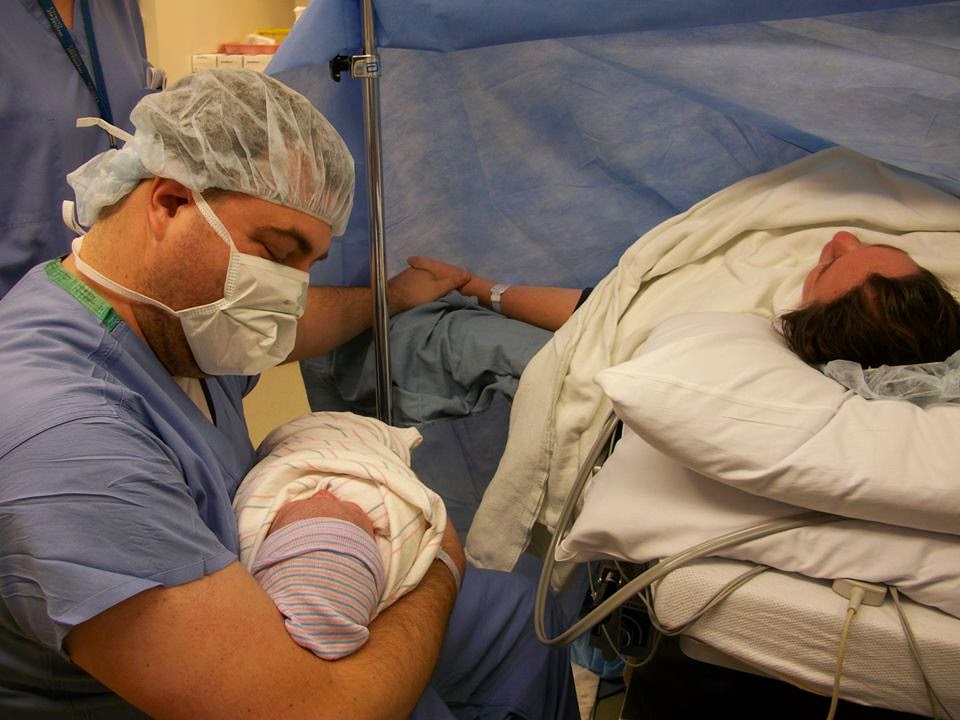
Missing Matthew's birth didn't have to happen. The plan was to rebolus my epidural and take me to surgery. The heart decels were first noticed at 2:30pm. Of course things don't get moving super fast in hospitals (unless they are truly an emergency at that moment), so all of a sudden at 3:30pm (shift change) they notice that his heartrate went down to 60 beats/minute and was not recovering. I won't forget being thrown onto the OR table and having someone put a mask over my face and telling me to take deep breaths. I remember thinking "Crap, I'm going under, I'm going to miss his birth." Wow - as I write that now, it really brings back memories. It is painful to think about the fact that I was not there when he was born. Most mom's come out of the anesthesia fairly soon. But, being that I was still on the Mag Sulfate - and that I was actually "sick", I came to around 6pm and was in and out of it until about 8pm. You'll see a picture below of me "meeting" Matthew for the first time. That was around 8:30pm - 5 hours after he was born! And then he went to the nursery for the rest of the night where they fed him bottles. Granted - there was no way I could have taken care of him - I could not move my arms or legs until about 4am the next day and I was still very out of it. I'm not sure what they knocked me out with - but it sure was strong. Should anything like this ever happen again, my husband would insist on the baby staying with us or at least him regardless of my condition, and he would ensure the baby got fed an alternative way other than bottles. We didn't know any different - we thought there were only two ways to feed a baby - bottle or breast. In the morning of December 9th, I was feeling somewhat better and they brought Matthew to me and a pump. So they knew I planned on breastfeeding, but I think the nurses there also live by the philosophy - breast or bottle. Matthew was a late pre-term baby - he never should have been given bottles, he should have been finger fed, cup fed, syringe fed or something else. I was told that I couldn't try to nurse him until 24 hours after his birth since I was still on the Mag Sulfate and he shouldn't get that. That 24 hours was very damaging. I could never get him to latch on. And I knew nothing about alternative feeding methods. We went home and continued the cycle of attempting to breastfeed for 20 minutes, then pump, then bottle feed. I did pump and bottle feed for 4 months, but I was lucky enough to be able to bring Matthew to work with me - the downside was that I couldn't manage that whole pump, feed, clean parts, and get back to work routine. I just wanted to pop him on the breast and keep working (which I totally could have done with my daughter - VBAC breastfeeding baby).

I learned a lot from Matthew's birth. One thing that will forever impact any future pregnancies is the constant worry about pre-eclampsia. But, at least I know that I HAVE to eat, drink, and be healthy during my pregnancies. I feel like there are no free passes for me in that regards. Sometimes I wonder what would be worse - having a "wrongful" CPD diagnosis - some of you out there have experienced this - where the doctor tells you your pelvis is too small, or knowing that you've had pre-e before and it could come again - even earlier and thus lead to another c-section. Neither scenario is pretty. I think a lot of us mom's who've been through a Cesarean and are seeking or weighing the options of a VBAC beat ourselves up mentally or have a lot of mental/emotional hurdles to get through in order to have the best birth possible.

Oh - one other thing I remember that I wanted to mention - because no one understands this - is that I felt like I kind of had to work at getting to know/love Matthew right away. The whole disconnect and lack of immediate bonding really played into that. I tried to explain this to my husband once and he gave me this look of like "What are you talking about - what do you mean you didn't feel like you loved him." I stopped trying to explain right away. It was also challenging every time I'd try to breastfeed and Matthew was screaming at my breast - I'm sure he was like "Where is that thing that drips at a ridiculously fast rate into the back of my throat? I need that."

When all is said and done - three years later - I can honestly say that the painful parts of Matthew's birth have definitely faded. I will always be sad that I missed it and that we didn't have a breastfeeding relationship. While I was sad a lot about missing his birth, I really focused on holding him, loving him, and getting to know him since our initial bonding was taken away. I was blessed in return with a baby who was very easy going, smiled and laughed a lot. I actually find myself grateful for my c-section, because we need more people to advocate for better births in this country. I am so proud to be a part of this group! I am happy to advocate for VBACs, better births initially, breastfeeding success, etc.


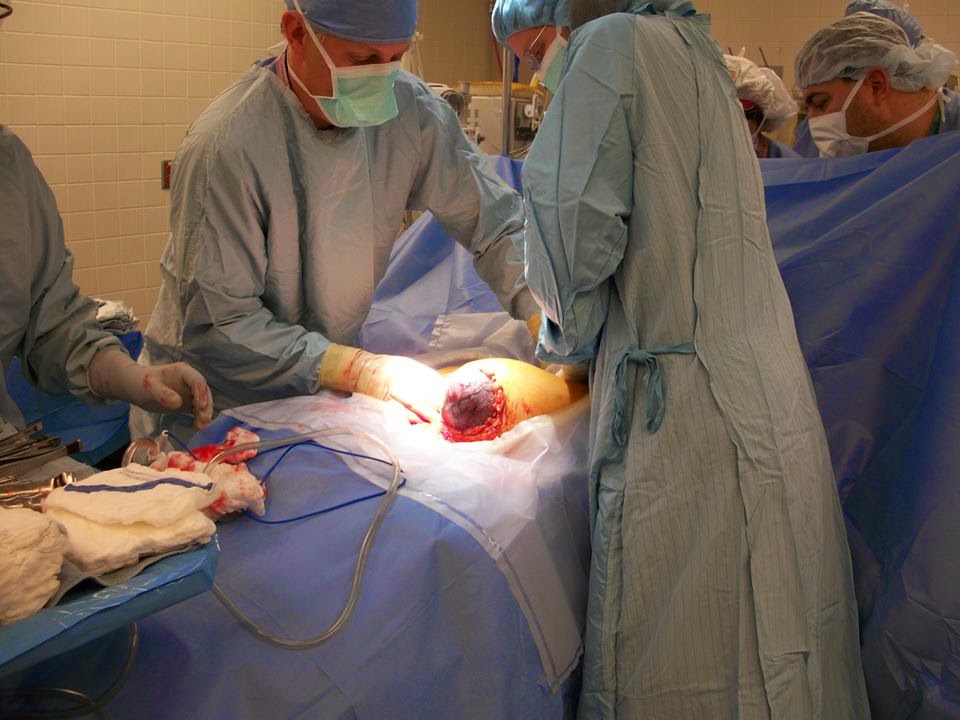
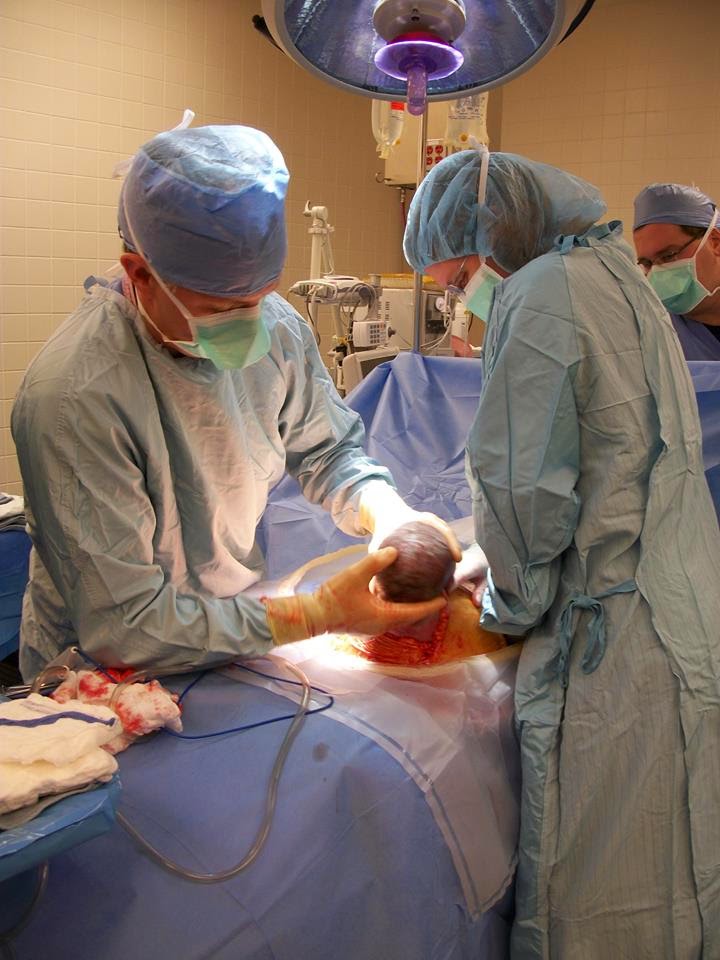
So here are some pictures of Matthew's birth:


I can't believe I let Mike take this. I can't believe I'm trying to smile through all of that hell. This is about 10am - in-between vomits. No epidural yet, but I am out of it from the Mag. I've got the oxygen mask on because that was shortly after that first decel episode of Matthew's. I hated that thing too.


Here he is just born! I'm still proud of his first moments - just wish I would have been there. He was 5lb 2oz at 36weeks and 5 days. Born on a Friday at 3:35pm.

Here is my first meeting with him at around 8pm - almost 5 hours post-birth. I remember that it was just too much work to keep my eyes open. I remember my husband telling me to say something to Matthew, so I mustered up a weak "I love you", but I remember feeling like an idiot that my husband had to tell me to say something.

The next morning about 9am - ahhhh - our nursing relationship is being sabotaged. How I wish I would have known that even though I couldn't attempt actual feeding at the breast for 24 hours that there were other ways to feed him.


Matthew was born on Friday afternoon - here we are on Sunday afternoon. I wish I would have begged to leave that place then. I remember I just wanted to get out of there. We did leave Monday morning. I was lucky that despite how crazy and terrible the birth was - I had a fairly pain-free post-partum period (I remember my bout with mastitis at 1 1/2 weeks post-partum better than my surgery pain). However - part of why I think I label my post-partum period as "fairly pain-free" is that I was just trying to escape for what was a nightmare for me at the time. I really think I was able to kind of push the pain aside and mentally move past any physical pain because I didn't want any reminders of what was a very terrible thing for me.


Next time - I'll analyze my VBAC story a little more. While I was thrilled to have a VBAC - having one in the hospital definitely got in the way of things at times. More about that later!


Tuesday, December 15, 2009

Dads get post partum depression, too

The great discussion at last night's support meeting ("Healing From Traumatic Birth") reminded me of this recent article from the New York Times on fathers and post partum depression.

According to the article:

Up to 80 percent of women experience minor sadness — the so-called baby blues — after giving birth, and about 10 percent plummet into severe postpartum depression. But it turns out that men can also have postpartum depression, and its effects can be every bit as disruptive — not just on the father but on mother and child.

We don’t know the exact prevalence of male postpartum depression; studies have used different methods and diagnostic criteria. Dr. Paul G. Ramchandani, a psychiatrist at the University of Oxford in England who did a study based on 26,000 parents, reported in The Lancet in 2005 that 4 percent of fathers had clinically significant depressive symptoms within eight weeks of the birth of their children. But one thing is clear: It isn’t something most people, including physicians, have ever heard of.

 I guess it really shouldn't be surprising. Childbirth certainly transforms life for a woman who becomes a mother, but men go through a significant change as well, often bringing up new worries about the health and well-being of their partners and children, as well as increased financial and other strain. In the case of men whose partners have had traumatic birth experiences, the rate of post partum depression might be even higher.

So, why don't we know more about this? Again, from the article:

Unlike women, men are not generally brought up to express their emotions or ask for help. This can be especially problematic for new fathers, since the prospect of parenthood carries all kinds of insecurities: What kind of father will I be? Can I support my family? Is this the end of my freedom?

And there is probably more to male postpartum depression than just social or psychological stress; like motherhood, fatherhood has its own biology, and it may actually change the brain.

A 2006 study on marmoset monkeys, published in the journal Nature Neuroscience, reported that new fathers experienced a rapid increase in receptors for the hormone vasopressin in the brain’s prefrontal cortex. Along with other hormones, vasopressin is involved in parental behavior in animals, and it is known that the same brain area in humans is activated when parents are shown pictures of their children.

There is also some evidence that testosterone levels tend to drop in men during their partner’s pregnancy, perhaps to make expectant fathers less aggressive and more likely to bond with their newborns. Given the known association between depression and low testosterone in middle-aged men, it is possible that this might also put some men at risk of postpartum depression.

Well, duh. I guess we could have guess at the whole men-don't-express-their-emotions well. But the biological links are not something that I had ever thought about.

So, what can we women, their wives and partners, do about it? One thing is to get help for our own depression. The reason is this:

By far the strongest predictor of paternal postpartum depression is having a depressed partner. In one study, fathers whose partners were also depressed were at nearly two and a half times the normal risk for depression. That was a critical finding, for clinicians tend to assume that men can easily step up to the plate and help fill in for a depressed mother. In fact, they too may be stressed and vulnerable to depression.

There are lots of resources in the Twin Cities community for support in healing from depression and other difficult emotions after birth. Whether you had a traumatic experience or the most wonderful birth imaginable, post partum depression can be a serious, but not insurmountable, issue - not only for moms, but for dads too.

Click here for a list of local resources.

Sunday, November 29, 2009

Introducing myself

I am thrilled to be introducing myself as a blogger here for ICAN of the Twin Cities. I am so excited to be doing this for so many reasons. But before I get way off track already, let me tell you a little bit about myself.

My name is Jessie Bridgeford. I am a mama of two: Matthew, who will be 3 on December 8th and Alex (Alexandra) who will be 1 on January 13th. I've been married to my husband Mike for 6 1/2 years and we live in Blaine. I first graduated from Concordia University, St. Paul in 2001 with an Elementary Education degree and a minor in Confessional Lutheranism. I taught 5th grade for a year out of state and came back to MN and worked for a group home company for the next 5 years. In the meantime I went back to school and have been an RN now for 2 years! Somewhere in all of that I managed to have my two babies. I'm currently working as a Pediatric Float Nurse at the U of M Fairview Hospital. I love having the variety of the two Med/Surg Peds Units, the Peds BMT (Blood/Bone and Marrow Transplant)Unit, and the Peds ICU. However, I really want to be working over in the Birthplace, but the job market for RNs is currently very slow.

So - the reason I'm here. . . . . .after my son was born, about the second I was coherent again I knew I would do everything in my power to have a VBAC. Even though there were a lot of things I didn't know about birth during my first pregnancy, I knew enough to know that VBAC was an option if things "did not go as planned" with my first birth. And boy, did they ever not go as planned. You can read the long story here: http://www.icantwincities.org/ and then click on "Birth Stories" and "Matthew's Birth Story (Ceserean)". I think one of the worst things about Matthew's birth was the fact that I missed his birth and was under general anesthesia and having a severed nursing relationship due to lack of staff knowledge about breastfeeding and them giving him bottles for the first 24 hours of life (great way to transition a late pre-term baby to the breast ). I've definitely done my fair share of processing his birth and will save all of that for another post later on. One final introductory thought on his birth - I wouldn't be where I am today had I not had his birth experience. I think I would have still developed a strong interest and maybe even a passion for childbirth like I have now, but my mind may not have been opened in the way it is now - or coming from the point of view that it currently comes from.

You can read my daughter's birth story at the same link as above, just click on "Alex's Birth Story (VBAC)". I also have done lots of processing on her birth because it was definitely a less than ideal VBAC (in my mind anyway) and I went down the road of many interventions, and learned even more about what I need to birth the way I want and need to birth. I did have a VBAC with her, but there are definitely limitations to a hospital VBAC. But, at least I knew the interventions I was choosing, why I was choosing them, and what the risks/benefits were. Continued reflections on her birth is also another post in itself.

I know, at first anyway, that a lot of my posts might have to do with my own experiences. But, in my research and quest for a better birth, I found that hearing from women just like myself was helpful, therapeutic, and insightful. I hope that I can provide some of the same insight and inspiration for other mothers out there. I love to think that I have special insight into pre-eclampsia and high blood pressure in pregnancy. While I avoided pre-eclampsia with Alex, I did end up having post-partum hypertension that resolved by 6 weeks post-partum, but was a pain to deal with nonetheless.

All that being said - thanks for inviting me to be a part of this blog. Coments and thoughts are always welcome!

Tuesday, November 24, 2009

Welcome new bloggers!

We welcome three new mamas to our roster of contributors:
  • Jessie Bridgeford - mother of two, most recently to Alex by VBAC
  • Chandra Fischer - mother of two, our fearless chapter librarian and founder of the chapter in 2005
  • Vanessa Coldwater - midwife, mama and "tub lady". Vanessa plans a regular "ask the midwife" column
Stay tuned for great posts to come from these ladies!
..

Tuesday, November 17, 2009

Post-partum Depression Study

Opportunity to Participate in a Research Study on Postpartum Depression

A study investigating women’s experiences of pregnancy after recovering from Postpartum Depression is being conducted. Candidates for participation are women who have been diagnosed with moderate to severe Postpartum Depression by a mental health or medical professional and then had a child after recovering from that depressive episode. All participants must have given birth between nine and twenty-four months ago (i.e. their most recent child is between nine months and two years old) and be free from symptoms of Major Depression at the time of participation.

This study is comprised of a short, 10-15 minute phone interview consisting of some demographic questions (e.g. age, ethnicity, date of initial diagnosis, current psychological functioning). Additionally, some women may be asked to participate in two 1-2 hour audiotaped interviews to take place in a private, convenient location of their choice. The first interview will consist of questions aimed at gathering information on the experience of pregnancy after recovering from Postpartum Depression. The follow-up interview will be used to clarify ideas that arise from the first interview and will provide a chance to gain new information that may have been left out in the first interview. Women who participate in the 1-2 hour interviews will be compensated with a $5.00 Target gift card after each interview. Additional benefits of the study include informing mental health professionals about the process of preparing for another child as well as another potential episode of Postpartum Depression. In this way, professionals can be better informed of what women find helpful, what is not helpful, and what they wish they would have done differently. This information has the potential to enable professionals to aid other women who are in similar situations. Your participation in this research is completely voluntary and confidential. You may choose to withdraw from the study at any time.

If you are interested in participating in this study, please contact Amanda Delsman, Doctoral Candidate at the American School of Professional Psychology/Argosy University, Twin Cities, via email at adelsman@msp.stu.argosy.edu or via telephone at 651-492-3572.

Monday, November 9, 2009

ICAN Webinars: Home Birth After Cesarean

Join the women of ICAN at this month's online events! Online webinars offer you the opportunity to learn and interact in an exciting format. All you need to participate is a computer with internet access and speakers or a headset.

Educational webinars are free to ICAN subscribers. If you are not a current subscriber, you may subscribe or renew through the ICAN Bookstore or through your local chapter, or pay the applicable webinar fee.

Online support meetings are always free for everyone.

http://ican-online.org/webinars


NOVEMBER

Online Support Meeting: Homebirth After Cesarean
Tuesday, November 17, 10:00 pm EST
Free for everyone

Join the women of ICAN in a live online support meeting. The topic for this meeting is "Homebirth After Cesarean." Share your story, your fears, your dreams…and support other women in their journeys.
http://ican-online.org/online-support-meetings

* * *

Homebirth After Cesarean: What the Research Does and Doesn't Say
Sunday, November 22, 3:00 pm EST
Free for ICAN subscribers - subscribe now: http://ican-online.org/store

CEUs available for childbirth professionals

Is homebirth after cesarean (HBAC) as safe as in-hospital VBAC? What elements make it risky? With no studies are available on HBAC, Amy Haas, BCCE takes on the difficult task of applying the available studies on VBAC to the domain of homebirth to give a general idea on its safety.
http://ican-online.org/webinars/homebirth-after-cesarean

To unsubscribe from these announcements, login to the forum and uncheck "Receive forum announcements and important notifications by email." in your profile.

You can view the full announcement by following this link:

http://ican-online.org/forum/index.php?topic=1945.0

Wednesday, November 4, 2009

Planning a VBAC


Join us for our monthly support meeting next Monday, November 9th, from 6:30-8:30pm. Our topic will be planning a VBAC. We will discuss reasons to consider VBAC for your next birth as well as resources and things you can do to prepare. Our own Heather Deatrick will be leading our discussion.

Childcare is available for a $5 donation. Please RSVP to icantwincities@gmail.com

Meeting location:
Holy Cross Lutheran Church
720 E Minnehaha Pkwy, Minneapolis, 55407

Friday, October 9, 2009

Birth & Baby Expo TOMORROW!


Twin Cities Birth & Baby Expo
Tomorrow, 10:00am to 5:00pm
Midtown Global Market

Over 50 Exhibitors (see below)
Door prizes
Goodie bags
"Meet the doulas and midwives" event @ 11:00am

Resources, products, services for healthy birth & parenting!

Presented by: ICAN of the Twin Cities

Sponsored by: Blooma Yoga & Wellness, the Childbirth Collective, Family Times Inc., Health Foundations Family Health & Birth Center, Helping Hands Birth Services, Lake Pointe Chiropractic & Wellness, Morningstar Women's Health and Birth Center, Peapods Natural Toys & Baby Care


Exhibitors:
  • 3 Bears Chiropractic & Wellness and Bodywork by Liv
  • American College of Nurse Midwives, Chapter 11 Region
  • Americare Chiropractic Wellness Center
  • Awesome Nannies
  • Bellies to Babies
  • Bliss Yoga Studios/Veronica Jacobsen, CD(DONA), LCCB, CLC
  • Blooma Yoga & Wellness
  • Brelle Co. LLC/Child's Health Journal
  • Chamindika Wanduragala (unique, artist-designed baby clothes)
  • Child & Family Chiropractic Center
  • Cindy Miller, Farmers Insurance
  • Cultural Care Au Pair
  • Diaper Free Baby
  • Discovery Toys (Marlene Zoller)
  • Do Good Diapers
  • Earth Mother Midwife
  • E. Dahl Photography
  • EMERGE - MSP
  • Everyday Miracles
  • Family Tree Clinic
  • Health Foundations Family Health & Birth Center
  • Helping Hands Birth Services/Nickie's Naturals
  • Hennepin County Medical Center, Nurse Midwife Service
  • Intentional Environment
  • International Cesaren Awareness Network of the Twin Cities
  • It Works Marketing
  • Joeys by Dar
  • Lake Pointe Chiropractic & Wellness
  • Mama Luna Doulas
  • Minnesota Better Birth Coalition
  • Minnesota Council of Certified Professional Midwives (MCCPM)
  • Minnesota Families for Midwifery
  • Minnesota International Center for Trad. Childbearing
  • Morningstar Women's Health & Birth Center
  • Optimal Health Zone
  • Parenting Oasis
  • Pregnancy & Postpartum Support of Minnesota
  • Revolution Wellness Center
  • Sally Kirwin, RN
  • Soft Bums
  • Spellbound Jungle Photography
  • St. Croix Valley Doulas
  • Swami Baby
  • Sweet Pickles, LLC
  • Ten Moons Rising
  • The Bradley Method of Natural Childbirth
  • The Childbirth Collective
  • Victoria Welch (henna, natural baby items)
  • Vida Baby Boutique
  • Wildtree Herbs
  • Wonderment
  • Young Living Essential Oils

Tuesday, October 6, 2009

A Boring Birth?!? The UC of Isaiah Gideon

by Martha Basham

I just don’t know if there are words to do justice to the way my baby boy came into this world. To put it simply and maybe best, it was a little piece of heaven. I’ve never been closer to God or my family as I was in the moments he was born and after.

Even now, 2 weeks to the day after he was born, I have a hard time believing how amazing his birth was. I feel like I dreamed it all. While I was pregnant I only hoped, dreamed, that it would be what it was. I would live and relive those moments over and over again if I could and will draw on that experience any time in my life that I need strength or courage. Because of his birth I know myself better. His birth was about responsibility from the start. During pregnancy I was responsible for taking the best care of myself that I ever have in my life. During the 2 years prior to his birth I took responsibility for preparing and educating myself about birth and every possible path that birth could take. I surrounded myself with people who were also educated about birth. But ultimately in my mind, my soul, I had a perfect picture of what this birth would be and it was.

What it wasn’t was dramatic. Or scary. Or painful. It wasn’t anything that people typically envision in a birth. And it was nothing like you see on t.v. By all means, Isaiah’s entrance into this world would probably be classified by some, as boring.

A boring birth.

But really, I would not call it boring. Sure, it wouldn’t make for good t.v. but I wouldn’t call it boring. I would call it peaceful. Joyous. Beautiful. Calm. Relaxing. Even triumphant.

On July 22nd at 3:00 pm my family who had just visited prior to leaving for their trip to Hawaii for my brother’s wedding was getting ready to say goodbye. My husband worked the night shift that night and he woke up as they were leaving to see them off. At 3:30 he was getting ready to go to work and I sat down on the couch to relax after a long day. My 3 girls, 5, 3, and 1 were playing. They had woken early that morning and my 1 year old was getting very tired after a long day with no nap. We had spent the day shopping and having ‘girl’ time together as I knew that things would get busy when the baby arrived.

When I sat down on the couch I felt the baby drop. It happened very quickly and noticeably. Shortly after that I had this feeling that labor would be starting soon. By 4:00 Nick was ready to go to work. I wasn’t having regular contractions, just the same Braxton hicks/ prodromal labor that I had experienced for weeks prior. Instinctually I knew that it was going to happen that night. I just knew. I let him know this but told him to go to work anyway ’just in case it wasn’t’. We all said goodbye and he was off to work. It took him about an hour to get to work and would take him another hour to get home. By 5:00 I was still not having regular contractions. They were still the same and still barely noticeable. I cleaned my house, helped my girls get ready for bed, washed all the laundry and took care of anything that I knew I wouldn‘t want to worry about once the baby did arrive. I was doing these things instinctually and that instinct was telling me that baby would be on the way very soon. I took a bath because I was tired and just wanted to relax. I sang along to my Ipod and could hear my older girls singing along from in their room while they were playing with their toys. I called Nick at work. He called back just after 5:00 and I told him he should come home or he might miss the birth. He was home by 6:00 and I was playing barbies with our girls. Our 1 year old had fallen asleep and it was just my oldest 2 still awake. When Nick got home he thought maybe my call was a false alarm. I was calm, relaxed, and not in pain. I did ask him to rub my back because it was tired after a long day. I was still keeping busy and my girls helped me switch the clothes from the washer to the dryer. It was almost 7:00 and I decided to lay down and rest a little. Still no regular or painful contractions. I went to the bathroom and half expected some signs of labor but nothing.

I went to go back to our room and lay down when my dh said, something along the lines of ‘so, we’ll have the baby tomorrow maybe?’ He was thinking he could go to sleep. I said, ‘no, baby will be here soon’. It was after 7:00 (7:15? I’m not sure…time is fuzzy at this point) I couldn’t sit still. I needed to be moving, pacing, walking, and I walked down our hall, into our living room, and then back into the bathroom. That was transition. It lasted about 5 minutes from the time I told Nick baby would be here soon and it never hurt. It was also the only time I had a regular contraction pattern or contractions that felt slightly more noticeable than Braxton hicks. My body then started to bear down. I wanted to be in the tub at first and the feeling of the water from the shower was very relaxing and soothing. Nick checked in on me and I think he finally believed that baby was going to be born soon. I reached down and felt the bag of water bulging. I told him that it was very close. Then I wanted to be out of the tub. I got out and Nick gave me towels to dry off. I made my way to our room and onto our bed.

Once I got on the bed I reached down again and felt a hairy head and shortly after that I knew I needed to slowly breathe him out. Nick and my girls were there with me, they were just watching and waiting quietly and patiently. When baby’s head came out I heard my older daughter say “I see the baby’s head!” I had my hand on baby’s head as it crowned and in the same contraction as the head was born the shoulders turned and baby’s body slid gently out into my hands onto the bed. He cried right away and was immediately pink. He looked around and then gave another good cry. I was so busy looking at him that I didn’t even think to look and see if he was a boy or a girl. We didn’t find out because we opted not to have an ultrasound. Nick asked and when I looked I half expected him to be a girl. I said “it’s a boy!!”

Within 15 minutes of his birth he was breastfeeding and the placenta came out. He ate for a half hour nearly every hour for the first 12 hours of his life, my milk came in the 2nd day, and has been a great eater! I’ve even kept up with the demands of cloth diapering a newborn (this is the biggest surprise for me!). He weighed in at 9lb 2oz on the fish scale Nick bought for his birth...our “catch of the day” as he called him :)

Isaiah Gideon was born exactly how I hoped he would be. He had a peaceful entrance into this world. I was able to listen to my body and my instincts and do everything I needed to so he could have a safe and peaceful birth. I knew myself enough to know exactly what I needed for his birth and I know birth enough to know exactly what I needed to bring him safely into this world. I had hoped I would “know” I was “in labor” sooner this time (last time I didn’t know until an hour before she was born!) and I did. Even though my labors aren’t ’traditional’, instinctually I *just knew*. I had hoped I would enjoy it and soak it all up and I did. I had hoped my husband and my girls would be able to witness it and they did. I had hoped for the birth that was perfect for me and our baby and it was. I am so thrilled that my girls were able to see a baby, their brother, brought into this world in such a way, that they too may someday birth without pain or fear and it might be a joyous and beautiful event for them too. I feel so incredibly blessed!

Friday, October 2, 2009

Mother-Sized Activism for VBAC!

Click over to the official International Cesarean Awareness Network's blog to learn about our new feature: "Mother-sized Activism" where we break down the big issues (like VBAC bans) into mother-sized bits.

When we all do our little (but significant!) part, we can make a big difference for birthing women!

Photo credit: Birgit Amadori

Saturday, September 19, 2009

Expo Exhibitors as of 9/17

We have the following confirmed exhibitors for the Expo on October 10th: Blooma Yoga & Wellness, Morningstar Women's Health & Birth Center, Helping Hands Birth Services/Nickie's Naturals, Lake Pointe Chiropractic & Wellness, Health Foundations Family Health & Birth Center, The Childbirth Collective,International Cesaren Awareness Network of the Twin Cities, Family Tree Clinic, The Bradley Method of Natural Childbirth, Cultural Care Au Pair, Optimal Health Zone, Awesome Nannies, St. Croix Valley Doulas, Do Good Diapers, Child & Family Chiropractic Center, Cynthia Miller - Farmers Insurance, Brelle Co. LLC, Wonderment, MN Families for ...Midwifery, MN International Center for Trad. Childbearing,Ten Moons Rising, Parenting Oasis, Bellies to Babies, Swami Baby, Soft Bums, MN Better Birth Coalition. There's still room for you - email us for more information to exhibit: twincitiesbaby@gmail.com

Thursday, September 10, 2009

Celebrate healthy birth & parenting!


The first-ever Twin Cities Birth & Baby Expo will take place on Saturday, October 10th from 10:00 to 5:00 at the Midtown Global Market (920 E. Lake St, Minneapolis).

What the Expo is all about:

This exciting event is presented by our ICAN chapter and sponsored by eight awesome Twin Cities organizations and businesses: Blooma, Childbirth Collective, Family Times, Inc., Health Foundations, Helping Hands Birth Services, Lake Pointe Chiropractic and Wellness, Morningstar Birth Center, and Peapods.

The purpose of the Expo is to showcase the phenomenal and diverse resources in our community that promote and celebrate healthy birth and parenting. Exhibitors will include doulas, midwives, childbirth educators, wellness service providers, natural products, support groups and more!

The event will also feature door prizes, goodie bags for the first 350 guests, and special times to "Meet the Doulas" and "Meet the Midwives."

What you can do:

* Attend and bring friends! It's FREE!
* Encourage a business or organization you love to exhibit at the Expo. Visit our website for info on exhibiting.
* Promote the Expo. Become a fan on Facebook. Contact us for fliers or postcards to distribute.
* Volunteer to help with spreading the word, setting up, or cleaning up. Email us to find out how to help

Saturday, August 22, 2009

Informative Birth Videos

Cross-post from ICAN-Blog:

Three new, thought-provoking videos related to childbirth are available online.

This video compares the cesarean experience with VBAC for both mom and baby:

Cesarean vs. VBAC: A Dramatic Difference from Alexandra Orchard on Vimeo.


The video below discusses infant mortality, especially among communities of color, and highlights the role of reducing unnecessary obstetrical interventions in improving outcomes.

Reducing Infant Mortality from Debby Takikawa on Vimeo.


Finally, this video shows an economist elaborating on the cost savings of increasing out-of-hospital birth:

Less Cesareans with Induction of Labor? Read the Fine Print!

Cross-post from ICAN-Blog:

Media reports this past week have hyped a recent study claiming that induction of labor may actually reduce the need for cesarean. These findings appear to contradict previous research and generally held opinion.

However, these reports have underplayed and underreported the substantial caveats offered by the researchers about their findings. Although the authors do report a 22% reduction in cesareans in women who had elective inductions after 41 weeks, they temper their findings with the following:

1) These findings may not translate to many, if any, hospitals in the U.S. because of how obstetricians tend to practice in reality. According to the press release, “Prior research has indicated that doctors often tend to proceed from starting an induction to cesarean fairly quickly.” Thus, in order for these findings to be relevant, doctors must have patience to allow inductions to work. (Which begs the question: Why not just wait for spontaneous labor to occur?)

2) Induction of labor, on the whole, remains vastly understudied and further analysis is needed. As one of the lead researchers on the study states, "It’s pretty surprising that something obstetricians do all the time hasn’t been studied all that well."

With these substantial caveats in mind, it’s far too soon to rush to the conclusion that induction of labor is “safer” than spontaneous labor, even in post-dates pregnancies. The fact remains that women must be aware of the risks associated with any obstetrical intervention and have the freedom to make choices that they believe are best for themselves and their babies, not doctors’ protocols and hospital time clocks.

Friday, August 21, 2009

Twin Cities Birth & Baby Expo - October 10th


Only seven weeks to go until October 10th!

Twin Cities Birth & Baby Expo
Saturday, October 10th
10am-5pm
Midtown Global Market
Minneapolis, MN

The mission of the Twin Cities Birth and Baby Expo is to connect local families with empowering, multicultural resources and education that promote healthy birth and parenting and to celebrate the transformative experience of becoming parents.

The Expo will showcase local businesses and organizations that operate in line with this mission. We aim to connect parents and families in the Twin Cities with businesses and organizations that offer products or services promoting healthy birth and parenting from diverse perspectives.

Sponsors: We have collected an amazing line-up of sponsors for the Expo and our heartfelt thanks go out to them: Blooma, Childbirth Collective, Family Times magazine, Health Foundations, Helping Hands Birth Services, Lake Pointe Chiropractic and Wellness, Morningstar birth center, and Peapods.

Advertising: We will be offering reusable welcome bags with goodies and informational inserts to the first 350 visitors to the Expo. For $25, you can have your organization's or business' inserts included in the bags. If your organization or business would like to donate goodies forthe bags, let us know (e.g. product sample, promotional pen/magnet/waterbottle/etc). We will also be doing door prizes. If you would like to donate an item for the door prizes, please contact me.

Exhibiting: Prices for exhibitor tables are: $75 for a for-profit business, $50 for a non-profit. If you feel that the prices are out of reach for your organization, we encourage you to join up with someone else to share a table or contact us to discuss. The deadline for applications is September 25th.

Volunteering: We are also looking for volunteers to help out the evening before, during, and after the Expo. Email me if you think you might be available to help with set-up, clean-up, or during the Expo.

Saturday, August 15, 2009

VBAC Webinar

Presented by VBAC Facts, “The Truth About VBAC” answers all your questions about vaginal birth after cesarean giving you the information you need to make an informed decision.

Why is this Webinar Important?

We live in a time where 50% of American hospitals have formal or de facto VBAC bans, where women are told VBAC is illegal, and where the practice of “pit to distress” is common.

Women who schedule their repeat cesarean do so believing that VBAC is not an option while others fight during labor to avoid unnecessary surgery after unknowingly hiring unsupportive medical professionals.

Women are not told that the risk decreases with each VBAC and yet increases with each cesarean. Women are not told that there is an approximately 99.6% chance they will not rupture and a 99.95% chance that their baby will be born alive and without permanent injury.* In short, women are led to believe that VBACs are risky, cesareans are safe and they believe it.

* Risk of uterine rupture during a spontaneous labor after one prior low horizontal cesarean is 0.4% or 1 in 250. Risk of infant death or brain damage is 0.05% or 1 in 2000. (Landon 2004)

Objectives

The goal of the webinar is to make information available and digestible for people to make their own decisions, never to convince anyone to have a VBAC or homebirth. Although women are more likely to have a successful VBAC in the out-of-hospital environment, many women prefer hospitals and are looking for ways to increase their likelihood of VBAC success. The webinar provides women with fully cited, research based information as well as specific, practical tools to plan their VBACs in either location through a comprehensive review of the latest VBAC research.

Content

Over the course of two 90-minute sessions, “The Truth About VBAC” provides women with a extensive analysis of their options as well as the encouragement they need to successfully VBAC:

Part 1: Sunday, September 27 9:00 pm EDT (6:00 pm PDT):

* Why do VBACs have a bad reputation?

* Cesarean Section: Immediate & long term risks to mom

* Cesarean Section: Risks to newborn

* Cesarean Section: Risks to future pregnancies

* Benefits of cesarean section

* Case study of a hospital VBAC ban

* VBAC success factors

* The marketing of "risk"

Part 2: Sunday, October 4 9:00 pm EDT (6:00 pm PDT):

* Uterine Rupture: An overview

* VBAC: Risks to baby

* VBAC: Risks to mom

* Benefits of spontaneous vaginal birth

* The risks & benefits of hospital vs. home vbac

* How to select a truly supportive care provider

* Coping with unsupportive friends & family

* Reading list & learning more

The fee for this 2-part webinar is only $30. Click here to register.

Click here for more information.

Tuesday, July 28, 2009

What I Love About My Cesarean

Cross-post from ICAN Blog:

Jasmine Ojala is a mother of two children and a member of ICAN of the Twin Cities. In this post she shares her reflections on what she’s learned from her births.

I have learned and grown so much through my two birth experiences. I had a traumatic cesarean three and a half years ago and a beautiful unattended homebirth just under 2 years ago… but, I am still so raw and emotional when it comes to my cesarean… I know there are many others here who can relate… I carry a lot of guilt around for the decisions I made during my cesarean born baby’s pregnancy, labor and delivery. I know now that I was very ignorant about my rights, my options, the scientific facts, etc.

Thinking about the VBAC a lot today, and with every wondrous, beautiful thing that happened with my VBAC baby’s birth, it has made me mourn even more deeply what I missed with my cesarean born child’s birth. I should be happy that I even got to experience a birth like that at all, painless-orgasmic-peaceful, everything I wanted… but I am just even more angry now that I /really know/ what I lost out on before… My husband is so supportive, but I think he secretly thinks I should be "over" everything by now, especially since the VBAC. But, I am still talking about, pouring over and investigating anything and everything I can get my hands on even remotely relating to birth. He doesn’t get it. He understands that I do what I am doing now to help any woman I can, even if I only can help one…. But I can tell it is getting old for him.

Anyway, I recently did the thing where you write out the positive things about your cesarean experience. So here is my list in no particular order:

1. I am not so ignorant anymore. The cesarean brought me out of my self-imposed ignorance. That was one of the best things the cesarean did for me. It taught me that I have a mind and I can study and I /should /put that to use. And I have.

2. The cesarean served as a way for me to receive some attention that I was craving from my mother. That may sound horrible, and I guess in some ways it is, but I didn’t realize that until I started to make my list. My mother has never been a "mothering" type- I hardly ever saw her, much less spent time with her. But she sure was a-motherin’ me after the cesarean. It was nice to have a mom.

3. Recovering from the trauma of the cesarean provided me and my husband with the opportunity to communicate on a whole new level. We have always had great communication but I had trouble allowing my "weakness" or "vulnerability" out in the open. I don’t like to ask for help- I don’t like to not handle things myself. The aftermath and recovery from the cesarean eliminated all choice I had in the matter, and all the better too, we are even closer now.

4. The cesarean opened my eyes to birth in our culture and opened up my options and alternatives for future births. I know many other women have said this before, but I would not know what I know now and be the person I have become if it weren’t for the cesarean. It is a shame that a major, traumatizing birth experience is what I needed to shake my beliefs and values like that but unfortunately, in our culture, that is usually how it is done. I wish that could be changed. Why is it that I needed a sledgehammer to the guts in order to ‘wake up’??

5. The cesarean has also shown me my great capacity to love my children and myself. I have a love for my children that is open and endless. I know I would sacrifice myself for them in a heartbeat because I’ve already done it once. I have learned to love my body too- it tried so hard. I used to think it failed me, but the reality was that I failed it, and my body was so resilient. Despite all the obstacles I allowed in it’s way, I *almost* gave birth. My body took to healing itself right away and did a great job… I love this magnificent body and mind of mine that can conceive, bear, birth and raise such beautiful people!

6. I have learned much about my own strength and my abilities to cope and grow. I feel like I am a better person, a stronger person, a more patient person. I am a lot more empathetic than I’ve ever been before. I also have a deep respect for myself that never existed before. I see myself the way I really am, rather than what I think I "should" be.

7. The cesarean taught me that no matter how much control I want or how much I think I have, life isn’t fair and never will be. Sometimes things just happen.

8. I learned it is up to me to deal with the consequences of my decisions, good or bad- no matter who/what I may feel is at "fault." That is what I love about my cesarean.

But you know what- I still desperately wish I’d had a blissfully ignorant vaginal birth. There is much longer list of all the things I hate about my cesarean, but that is too familiar a story.

Saturday, July 11, 2009

Pitocin: A Cautionary Tale

Cross-post from ICAN blog:

The blogosphere lit up this last week with posts about “pit to distress” (see here, and here), the practice of administering the maximum dose of Pitocin (synthetic oxytocin) to a laboring women until the baby shows signs of distress. Such overuse (and misuse) of Pitocin in labor raises the risk of cesarean, traumatic vaginal delivery, and other negative outcomes. Yet induction and augmentation with Pitocin is virtually unquestioned by birthing mothers and their medical providers.

This week’s announcement of Ohio’s largest jury award for medical malpractice tragically illustrates this problem. The jury awarded a family $31 million in compensation for their son’s severe cerebral palsy brought on by a uterine rupture during a mismanaged VBAC labor. The complaint cited the continued use of Pitocin despite the hyperstimulation of the mother’s uterus as demonstrated by an inappropriate contraction pattern. Although some might point to the VBAC labor itself as the cause, in fact the misuse of Pitocin in this case is most likely to blame for the rupture and ensuing disability. Use of Pitocin in VBAC labor is known to increase the likelihood of uterine rupture.

Such heartbreaking incidents highlight the need for reform in current maternity practices. Many routine obestetic interventions are not based on the best available evidence and increase risk rather than safety for mothers and babies. In addition, care providers frequently do not proivde women with full, informed consent/refusal about all interventions, despite ethical and legal mandates to do so.

In light of this reality, women who are pregnant or planning to become pregnant should educate themselves about routine obstetric interventions, such as induction/augmentation of labor with Pitocin and consider the risks/benefits for themselves and their babies. Doing so should influence decisions about type of provider, model of care, and place of birth.

Wednesday, July 8, 2009

Respectful Cesarean?

"Yeah, right."

At least, that was my response when I first saw the title of Joni Nichol's talk at ICAN's International Birth Conference in Atlanta last April. But after a few minutes of listening to Joni's descriptions of cesarean births with soft music playing in the OR and parents talking to their babies as they are born, I was warming up to the idea.

Joni is a midwife practicing in Guadalajara, Mexico. Her description of respectful cesareans included the following elements: cesarean is used only as an absolute last recourse, it is preceded by spontaneous labor whenever possible, the place of birth changes but not the philosophy of care, and the experience is made personal, positive, and memorable. Joni's talk left me dreaming of what changed attitudes in our medical community could do for women who truly need cesareans but who still want a peaceful, beautiful birth experience.

You can read about a respectful cesarean here on Joni's website.

Wednesday, July 1, 2009

Prevent Cesarean Surgery video

This excellent video won first prize ($1,000) in the "Birth Matters Virginia" video contest.

“Such great myth-busting and important information for all women, I loved your use of natural scenes. I'd love to see this video getting lots of airplay in the public arena.” –Dr. Sarah Buckley, MD

“The directness and statistics worked well together…” –Ricki Lake and Abby Epstein

“Very well done.” “One of my favorites. Talk about evidenced-based care; this really motivates someone to take action.” “This really puts it out there. Cesareans aren’t pretty.” “This was so emotional for me. The film does an excellent job questioning the idea that c-sections are easy, normal, and no big deal.” --from the BMV Judging Panel


Tuesday, June 30, 2009

Home birth featured on local TV news


WCCO-TV featured the home birth experience of one local family on their 10pm newscast last night. Their coverage was overwhelmingly positive. Unfortunately, they did give the last word to the head of obstetrics at Abbott Northwestern, the hospital with the highest cesarean rate in the Twin Cities (35.9% in 2007, according to the Minnesota Department of Health data). Nonetheless, this was certainly good press for normal birth. Kudos to Liz Collins and WCCO!

Read/watch the story here.

Monday, June 22, 2009

Cesarean Prevention Webinar

There is still time to register for ICAN's cesarean prevention
webinar!

http://ican-online.org/none/ican-birth-class-cesarean-prevention

ICAN Birth Class: Cesarean Prevention
NEW Online Webinar

Planning YOUR birth? Are you keeping your fingers crossed and hoping
for the best? Well, take charge and find out ways you can increase
your chances of having an easier and safer birth. First-timers and
experienced mothers both can benefit from this class.

This 2-hour online session will help you learn:

* Different kinds of care providers you can use, and the pros and cons of each
* How to empower yourself to make educated choices during your
pregnancy and during labor
* What factors contribute to your chances of having an unnecessary or
preventable cesarean
* What is the "downward spiral of intervention"
* Why avoiding an unnecessary cesarean is safest for you and your baby
* When cesareans are truly necessary

Tuesday, June 23rd - 10:00 pm EDT (7:00 pm PDT)

$20.00 fee benefits ICAN - click here to register:
https://www2.gotomeeting.com/register/999201490

Thursday, June 4, 2009

Empowered Birth After Cesarean (EBAC)


I recently learned a new term: EBAC, or Empowered Birth After Cesarean. Marisa Ring from ICAN of the Northland used it and I am hooked. The reason I like EBAC is because it can include all types of birth after cesarean, even CBAC (Cesarean Birth After Cesarean).

I think we often assume that VBAC is the only positive type of birth to have after a cesarean. Most of the time, it is the best birth to plan for. But it is not the only birth that can be empowered. I have heard women from our group talk about their repeat cesareans (what some might call "failed VBACs" - an awful term) as very empowering experiences because they were in control and making fully-informed decisions this time around, even though another cesarean was the best option.

CBACs can be empowered, VBACs can be empowered, HBACs can be empowered, UBACs can be empowered. What matters most no matter how we give birth is that we give birth. To me, this is what ICAN is all about: education and support for empowered birth.

Monday, June 1, 2009

Postpartum phone support


Every Monday and Wednesday, Postpartum Support International has free open phone sessions, called "Chat with an Expert." These sessions provide a free forum for information and contact. Wednesdays are for moms and supporters, and Mondays are for Dads.


You can join the call to talk or just to listen to others discuss resources, symptoms, options and general information with an experienced member of Postpartum Support International. You can talk from the privacy of your own home and there is no need to pre-register or give your name. Sessions are informational only and open to anyone with questions and concerns about themselves, a loved one, friend or family member.

See this link for details. http://postpartum.net/info-sessions/

Wednesday, May 13, 2009

Great photography for cheap!


As a fundraiser for our ICAN chapter, we are offering a special opportunity to have your children and/or family photographed by a professional photographer at a low price. All the proceeds will go to ICAN of the Twin Cities. You get a free CD of your pictures to print the poses you want!

Here are the details:

Date: Saturday, June 6th

Price: $25 for first child, $10 each additional child, $45 maximum/family

Location: Minneapolis Sculpture Garden (rain or shine!)

Email us to sign up for a time slot: icantwincities@gmail.com

Tuesday, April 7, 2009

Cesarean Awareness Month

The Cesarean Awareness Ribbon debuted in April of 2004 for Cesarean Awareness Month. The burgundy color of the ribbons represents birth and the wearing of the ribbon upside down symbolizes the state of distress many pregnant women find themselves in when their birthing choices are limited. The loop of the inverted ribbon represents a pregnant belly and the tails are the arms of a woman outstretched in a cry for help.

Click here for information on special discounts on ICAN membership in honor of Cesarean Awareness Month, now through April 30th.

Wednesday, March 18, 2009

C-section Rate Jumps to 31.8% in U.S., 26.2% in MN

For Immediate Release


Cesarean Rate Jumps to Record High; 1 in 3 Pregnant Women Face Surgical Delivery


More Women Forced into Surgery; Few Mothers Recognize They Can Reduce Their Risk of Surgery


Redondo Beach, CA, March 18, 2000 – The National Center for Health Statistics has reported that the cesarean rate hit an all‐time high in 2007, with a rate of 31.8 percent, up two percent from 2006.


“Every pregnant woman in the U.S. should be alarmed by this rate,” said Pam Udy, president of the International Cesarean Awareness Network (ICAN). “Half or more of cesareans are avoidable and over‐using major surgery on otherwise healthy women and babies is taking a toll.”


A major driver of cesarean overuse is underuse of vaginal birth after cesarean (VBAC). The VBAC rate currently hovers around 8 percent, far lower than the Healthy People 2010 goal of 37 percent. Driving this decline is the growing practice of hospitals banning VBAC.


In February, ICAN released the results of a new survey showing a startling increase in the number of hospitals banning VBAC. The survey showed a near triple increase (174%) from November 2004, when ICAN conducted the first count of hospitals forbidding women from having a VBAC. In 2004, banning hospitals numbered 300. The latest survey, conducted in January 2009, counted 821 hospitals formally banning VBAC and 612 with “de facto” bans.1 Full results of the research can be seen at http://www.ican‐online.org/vbac‐ban‐info. Between formal and de facto bans, women are not able to access VBAC in 50% of hospitals in the U.S.


Research has consistently shown that VBAC is a reasonably safe choice for women with a prior cesarean. According to an analysis of medical research conducted by Childbirth Connection, a well‐respected, independent maternity focused non‐profit, in the absence of a clear medical need, VBAC is safer for mothers in the current pregnancy, and far safer for mothers and babies in future pregnancies.2 While VBAC does carry risks associated with the possibility of uterine rupture, cesarean surgery carries life‐threatening risks as well.


“The choice between VBAC and elective repeat cesareans isn’t between risk versus no risk. It’s a choice between which set of risks you want to take on,” said Udy.


Studies from the National Institute of Child Health and Human Development Maternal–Fetal Medicine Units Network, one most recently published in the February 2008 issue of the Journal of Obstetrics and Gynecology, demonstrate that repeated cesareans can actually put mothers and babies at greater clinical risk than repeated VBACs.3

In October 2008, Childbirth Connection released a report called “Evidence‐Based Maternity Care: What It Is and What It Can Achieve,” 4 showing that the state of maternity care in the U.S. is worrisome, driven largely by a failure of care providers to heed evidence‐based care practices. For most women in the U.S., care practices that have been proven to make childbirth easier and safer are underused, and interventions that may increase risks to mothers and babies are routinely overused. The authors of the report point to the “perinatal paradox” of doing more, but accomplishing less.


“All pregnant women are faced with important choices in their pregnancies. It is critical for women to understand what their choices are, and learn to spot the red flags that can lead to an unnecessary or avoidable cesarean,” said Udy.


Women who are seeking information about how to avoid a cesarean, have a VBAC, or are recovering from a cesarean can visit www.ican‐online.org for more information. In addition to more than 90 local chapters nationwide, the group hosts an active on‐line discussion group that serves as a resource for mothers.


For women who encounter VBAC bans, ICAN has developed a guide to help them understand their rights as patients. The resource discusses the principles of informed consent and the right of every patient to refuse an unwanted medical procedure. The guide can be found at http://www.ican‐online.org/vbac/your‐right‐refusewhat‐do‐if‐your‐hospital‐has‐banned-vbac‐q.


About Cesareans: When a cesarean is medically necessary, it can be a lifesaving technique for both mother and baby, and worth the risks involved. Potential risks to babies from cesareans include: low birth weight, prematurity, respiratory problems, and lacerations. Potential risks to women include: hemorrhage, infection, hysterectomy, surgical mistakes, re‐hospitalization, dangerous placental abnormalities in future pregnancies, unexplained stillbirth in future pregnancies and increased percentage of maternal death. http://www.icanonline.org/resource/white_papers/index.html


Mission statement: ICAN is a nonprofit organization whose mission is to improve maternal‐child health by preventing unnecessary cesareans through education, providing support for cesarean recovery and promoting vaginal birth after cesarean. There are 94 ICAN Chapters across North America, which hold educational and support meetings for people interested in cesarean prevention and recovery.

1. A “de facto” ban means that surveyors were unable to identify any doctors practicing at the hospital who would provide VBAC support.
2. http://www.childbirthconnection.org/article.asp?ck=10210#bottom Best Evidence: VBAC or Repeat C‐Section, Childbirth Connection
3. Mercer et al, Labor Outcome With Repeated Trials of Labor Am J Obstet Gynecol 2008;VOL. 111, NO. 2, PART 1 Silver et al, Maternal Morbidity Associated With Multiple Repeat Cesarean Deliveries, Am J Obstet Gynecol 2006; VOL.107, NO. 6
4. http://www.childbirthconnection.org/article.asp?ck=10575 Evidence‐Based Maternity Care: What It Is and What It Can Achieve

Thursday, March 12, 2009

Two VBAC bills in Minnesota Senate

The following bills are under consideration in the Minnesota State Senate:

S.F. No. 1468, as introduced - 86th Legislative Session (2009-2010) Posted on Mar 11, 2009

1.1A bill for an act
1.2relating to health; regulating hospital policies on cesarean section under certain
1.3circumstances;proposing coding for new law in Minnesota Statutes, chapter 144.
1.4BE IT ENACTED BY THE LEGISLATURE OF THE STATE OF MINNESOTA:

1.5 Section 1. [144.566] VAGINAL BIRTH AFTER CESAREAN SECTION.
1.6A hospital licensed under sections 144.50 to 144.56 must not prohibit a pregnant
1.7woman from choosing a vaginal birth solely because the woman has previously undergone
1.8delivery by cesarean section.


S.F. No. 1469, as introduced - 86th Legislative Session (2009-2010) Posted on Mar 11, 2009

1.1A bill for an act
1.2relating to health; prohibiting an individual health plan from refusing to issue
1.3coverage because of a previous cesarean delivery;amending Minnesota Statutes
1.42008, section 62A.65, subdivision 4.
1.5BE IT ENACTED BY THE LEGISLATURE OF THE STATE OF MINNESOTA:

1.6 Section 1. Minnesota Statutes 2008, section 62A.65, subdivision 4, is amended to read:
1.7 Subd. 4. Gender rating prohibited. (a) No individual health plan offered, sold,
1.8issued, or renewed to a Minnesota resident may determine the premium rate or any other
1.9underwriting decision, including initial issuance, through a method that is in any way
1.10based upon the gender of any person covered or to be covered under the health plan. This
1.11subdivision prohibits the use of marital status or generalized differences in expected costs
1.12between principal insureds and their spouses.
1.13(b) No health carrier may refuse to initially offer, sell, or issue an individual health
1.14plan to a Minnesota resident solely on the basis that the individual had a previous cesarean
1.15delivery.

Thursday, March 5, 2009

Cesaren Voices on KFAI - Sunday March 8th!

Kara, Heather and I have put together a radio program to air at 11:00am on KFAI on Sunday March 8th called "Cesarean Voices." Our show highlights our own cesarean and VBAC birth stories as well as the poetry of Suzanne Swanson, a local therapist and poet.

We hope the show will educate the public about the cesarean epidemic as well as the struggles so many of us face to give birth vaginally after cesarean. We also hope the show will communicate to women who have experienced traumatic birth that they are not alone - that we have a voice!

So, tune in Sunday at 11:00 on KFAI, 90.3 FM in Minneapolis and 106.7 FM in St. Paul. If you are not in the Twin Cities, you can listen online at http://www.kfai.org, click on "Listen Now." The show will also be available on KFAI's online archive if you miss it live.

Sunday, February 22, 2009

Access to VBAC is Shrinking

Feb 19 2009

New Survey Shows Shrinking Options for Women with Prior Cesarean

Bans on Vaginal Birth Force Women into Unnecessary Surgery

For Immediate Release

Redondo Beach, CA, February 20, 2009 – The International Cesarean Awareness Network (ICAN) has released the results of a new survey showing an alarming increase in the number of hospitals banning vaginal birth after cesarean (VBAC). The survey shows a near triple increase (174%) from November 2004, when ICAN conducted the first count of hospitals forbidding women from having a VBAC. In 2004, banning hospitals numbered 300. The latest survey, conducted in January 2009, counted 821 hospitals formally banning VBAC and 612 with "de facto" ban. (1) Full results of the research can be seen in the VBAC Ban Database.

The bans essentially coerce women into surgery they do not need. In response to bans, women are either submitting to unnecessary surgery or are traveling long distances to hospitals that do support VBAC. Some women are feeling forced out of hospital care altogether and are having their babies at home in order to avoid coerced surgery.

“There is an alarming disconnect between what medical research says about the safety of VBAC, and the way that hospitals and their doctors are practicing medicine” said Pam Udy, president of ICAN, an all-volunteer patient advocacy organization. “These bans are about business, not about the health and well-being of mothers and babies.”

Research has consistently shown that VBAC is a reasonably safe choice for women with a prior cesarean. According to an analysis of medical research conducted by Childbirth Connection, a well-respected, independent maternity focused non-profit, in the absence of a clear medical need, VBAC is safer for mothers in the current pregnancy, and far safer for mothers and babies in future pregnancies. (2) While VBAC does carry risks associated with the possibility of uterine rupture, cesarean surgery carries life-threatening risks as well. “The choice between VBAC and elective repeat cesareans isn’t between risk versus no risk. It’s a choice between which set of risks you want to take on,” said Udy.

Studies from the National Institute of Child Health and Human Development Maternal–Fetal Medicine Units Network, one most recently published in the February 2008 issue of the Journal of Obstetrics and Gynecology, demonstrate that repeated cesareans can actually put mothers and babies at greater clinical risk than repeated VBACs. (3)

Hospitals cite strict guidelines set by the American College of Obstetrics and Gynecology as the driver behind the bans. The ACOG guidelines stipulate that a full surgical team be “immediately available” during a VBAC labor, though the stipulation is a “Level C” recommendation, which means it is based on the organization’s opinion rather than medical evidence.

“If a hospital can’t handle a VBAC emergency, they can’t handle any emergency. VBAC-banning hospitals are claiming to be a safe place of birth for non-cesarean moms, but those mothers are just as likely to have an emergency as a mother with a prior cesarean” says Udy. Placental abruption, cord prolapse, fetal distress are all common emergencies that any mother can experience and require immediate attention.

For physicians, repeat cesareans are often considered more convenient, more lucrative and better insulation from lawsuits. VBACs are inconvenient and costly because they require the physician to be on-site and be available to care for the mother. “ACOG created clinical guidelines that are, in effect, good for business,” said Gretchen Humphries, ICAN’s Advocacy Director, who spearheaded the research. “If physicians think VBAC patients need more attention, then they can simply provide that attention by being in the hospital. But it’s easier to just push women into unnecessary surgery.”

“These bans mean that any mother with a prior cesarean is going to have to be aggressive about seeking out balanced information about the pros and cons of a VBAC versus an elective repeat cesarean, and unfortunately, be prepared for an uphill climb if she chooses to have a VBAC,” said Humphries. For more information, please visit our page about the rights of mothers facing VBAC bans.

For more information about the clinical risks of VBAC and elective repeat cesarean, please visit Childbirth Connection.

About the survey: This survey was powered by an all-volunteer team of callers who called, state by state, hospitals across the country. Survey volunteers used publicly available listings of hospitals and made every effort to call every hospital in each state. Surveyors contacted each hospital’s Labor and Delivery (L&D) ward and questioned L&D nurses about the hospital’s practices. Survey questions were designed to elicit information about formal bans, de facto bans, the reasoning behind the bans, and the level of coercion mothers might face if couldn’t find an alternate hospital option. Information from calls was recorded into a central database. A total of 2,850 hospitals were called. Individual records are available for viewing here.

About Cesareans: ICAN recognizes that when a cesarean is medically necessary, it can be a lifesaving technique for both mother and baby, and worth the risks involved. Potential risks to babies include: low birth weight, prematurity, respiratory problems, and lacerations. Potential risks to women include: hemorrhage, infection, hysterectomy, surgical mistakes, re-hospitalization, dangerous placental abnormalities in future pregnancies, unexplained stillbirth in future pregnancies and increased percentage of maternal death.

Mission statement: ICAN is a nonprofit organization whose mission is to improve maternal-child health by preventing unnecessary cesareans through education, providing support for cesarean recovery and promoting vaginal birth after cesarean. There are 94 ICAN Chapters across North America, which hold educational and support meetings for people interested in cesarean prevention and recovery.

For Interviews: Contact ICAN President Pam Udy at (801) 458-2190 or ICAN Advocacy Director Gretchen Humphries at (517) 745-7297.

________________________

(1)A “de facto” ban means that surveyors were unable to identify any doctors practicing at the hospital who would provide VBAC support.

(2) http://www.childbirthconnection.org/article.asp?ck=10210#bottom Best Evidence: VBAC or Repeat C-Section, Childbirth Connection

(3)Mercer et al, Labor Outcome With Repeated Trials of Labor Am J Obstet Gynecol 2008;VOL. 111, NO. 2, PART 1

Silver et al, Maternal Morbidity Associated With Multiple Repeat Cesarean Deliveries, Am J Obstet Gynecol 2006; VOL. 107, NO. 6

Thursday, February 19, 2009

TIME: The Trouble with Repeat Cesareans

ICAN's national VBAC ban survey is featured in this week's issue of TIME Magazine:

The Trouble With Repeat Cesareans

For many pregnant women in America, it is easier today to walk into a hospital and request major abdominal surgery than it is to give birth as nature intended. Jessica Barton knows this all too well. At 33, the curriculum developer in Santa Barbara, Calif., is expecting her second child in June. But since her first child ended up being delivered by cesarean section, she can't find an obstetrician in her county who will let her even try to push this go-round. And she could locate only one doctor in nearby Ventura County who allows the option of vaginal birth after cesarean (VBAC). But what if he's not on call the day she goes into labor? That's why, in order to give birth the old-fashioned way, Barton is planning to go to UCLA Medical Center in Los Angeles. "One of my biggest worries is the 100-mile drive to the hospital," she says. "It can take from 2 to 3 1/2 hours. I know it will be uncomfortable, and I worry about waiting too long and giving birth in the car."


Much ado has been made recently of women who choose to have cesareans, but little attention has been paid to the vast number of moms who are forced to have them. More than 9 out of 10 births following a C-section are now surgical deliveries, proving that "once a cesarean, always a cesarean"--an axiom thought to be outmoded in the 1990s--is alive and kicking. Indeed, the International Cesarean Awareness Network (ICAN), a grass-roots group, recently called 2,850 hospitals that have labor and delivery wards and found that 28% of them don't allow VBACs, up from 10% in its previous survey, in 2004. ICAN's latest findings note that another 21% of hospitals have what it calls "de facto bans," i.e., the hospitals have no official policies against VBAC, but no obstetricians will perform them. (Read "The Year in Medicine 2008: From A to Z.")


Why the VBAC-lash? Not so long ago, doctors were actually encouraging women to have VBACs, which cost less than cesareans and allow mothers to heal more quickly. The risk of uterine rupture during VBAC is real--and can be fatal to both mom and baby--but rupture occurs in just 0.7% of cases. That's not an insignificant statistic, but the number of catastrophic cases is low; only 1 in 2,000 babies die or suffer brain damage as a result of oxygen deprivation.


After 1980, when the National Institutes of Health (NIH) held a conference on skyrocketing cesarean rates, more women began having VBACs. By 1996, they accounted for 28% of births among C-section veterans, and in 2000, the Federal Government issued its Healthy People 2010 report proposing a target VBAC rate of 37%. Yet as of 2006, only about 8% of births were VBACs, and the numbers continue to fall--even though 73% of women who go this route successfully deliver without needing an emergency cesarean.


So what happened? In 1999, after several high-profile cases in which women undergoing VBAC ruptured their uterus, the American College of Obstetricians and Gynecologists (ACOG) changed its guidelines from stipulating that surgeons and anesthesiologists should be "readily available" during a VBAC to "immediately available." "Our goal wasn't to narrow the scope of patients who would be eligible, but to make it safe," says Dr. Carolyn Zelop, co-author of ACOG's most recent VBAC guidelines.


But many interpreted the revision to mean that surgical staff must be present the entire time a VBAC patient is in labor. While major medical centers and hospitals with residents are staffed to provide this level of round-the-clock care, smaller hospitals typically rely on anesthesiologists on call. Among obstetricians, many solo practitioners are unable to stay for what could end up being a 24-hour delivery; others calculate the loss of unseen patients during that time and instead opt to do hour-long cesareans, which are now the most commonly performed surgeries on women in the U.S.


Some doctors, however, argue that any facility ill equipped for VBACs shouldn't do labor and delivery at all. "How can a hospital say it can handle an emergency C-section due to fetal distress yet not be able to do a VBAC?" asks Dr. Mark Landon, a maternal-fetal-medicine specialist at the Ohio State University Medical Center and lead investigator of the NIH's largest prospective VBAC study.


Part of the answer has to do with malpractice insurance. Following a few major lawsuits stemming from VBAC cases, many insurers started jacking up the price of malpractice coverage for ob-gyns who perform such births. In a 2006 ACOG survey of 10,659 ob-gyns nationwide, 26% said they had given up on VBACs because insurance was unaffordable or unavailable; 33% said they had dropped VBACs out of fear of litigation. "It's a numbers thing," says Dr. Shelley Binkley, an ob-gyn in private practice in Colorado Springs who stopped offering VBACs in 2003. "You don't get sued for doing a C-section. You get sued for not doing a C-section."


Of course, the alternative to a VBAC isn't risk-free either. With each repeat cesarean, a mother's risk of heavy bleeding, infection and infertility, among other complications, goes up. Perhaps most alarming, repeat C-sections increase a woman's chances of developing life-threatening placental abnormalities that can cause hemorrhaging during childbirth. The rate of placenta accreta--in which the placenta attaches abnormally to the uterine wall--has increased thirtyfold in the past 30 years. "The problem is only beginning to mushroom," says ACOG's Zelop.


"The decline in VBACs is driven both by patient preference and by provider preference," says Dr. Hyagriv Simhan, medical director of the maternal-fetal-medicine department of Magee-Womens Hospital of the University of Pittsburgh Medical Center. But while many obstetricians say fewer patients are requesting VBACs, others counter that the medical profession has been too discouraging of them. Dr. Stuart Fischbein, an ob-gyn whose Camarillo, Calif., hospital won't allow the procedure, is concerned that women are getting "skewed" information about the risks of a VBAC "that leads them down the path that the doctor or hospital wants them to follow, as opposed to medical information that helps them make the best decision." According to a nationwide survey by Childbirth Connection, a 91-year-old maternal-care advocacy group based in New York City, 57% of C-section veterans who gave birth in 2005 were interested in a VBAC but were denied the option of having one.


Zelop is among those who worry that "the pendulum has swung too far the other way," but, she says, "I don't know whether we can get back to a higher number of VBACs, because doctors are afraid and hospitals are afraid." So how to reverse the trend? For one thing, patients and doctors need to be as aware of the risks of multiple cesareans as they are of those of VBACs. That is certain to be on the agenda when the NIH holds its first conference on VBACs next year. But Zelop fears that the obstetrical C-change may come too late: "When the problems with multiple C-sections start to mount, we're going to look back and say, 'Oh, does anyone still know how to do VBAC?'"


Friday, February 13, 2009

ACOG under question by an insider

I just read this awesome editorial by the editor of Journal of Obstetric, Gynecologic, & Neonatal Nursing, Nancy K. Lowe, here. She really calls it like it is--"audacious." She points out that most doctors and nurses have never witnessed a natural birth, and our "system" has not improved outcomes. She calls into question ACOG's and the AMA's motives for issuing their resolution against homebirth. She sings the rallying cry: "Perhaps it is time for a new woman's movement, one that embraces the normalcy of childbirth and puts mothers and babies back on the center stage rather than the system's need to defend the interventionist subculture it has developed and that it must financially support." AMEN --that is what were are doing! And our numbers are growing!


See you March 9th at St Joes or Regions!


Heather


***************************************************************************************


EDITORIAL
The "Authorities" Resolve Against Home Birth
Nancy K. Lowe Editor
Copyright © 2009 AWHONN
ABSTRACT

No Abstract
DIGITAL OBJECT IDENTIFIER (DOI)10.1111/j.1552-6909.2008.00300.x About DOI

This editorial has been gathering momentum in my mind since I heard about a resolution introduced by the American College of Obstetricians and Gynecologists (ACOG) to the House of Delegates of the American Medical Association's (AMA) annual meeting in June 2008. American College of Obstetricians and Gynecologists's resolution #205 was adopted by the AMA and is titled "Home Deliveries." So that I cannot be accused of misquoting the AMA or ACOG, you will find the text of the adopted resolution at the end of this editorial. In his "College News" column of ACOG Today (September 2008), ACOG Executive Vice President Ralph W. Hale reported on his attendance at the AMA Annual Meeting and wrote, "Also, there was model legislation related to home deliveries supporting the ACOG position against home births." The point of this resolution is to lobby against home birth as an option for women and against providers of home birth services. This type of resolution by "authoritative" bodies such as ACOG and AMA will certainly influence decisions made by third-party payers when women request home birth services and by liability insurance carriers when providers seek coverage for home birth services.

Rumor has it, as stated in the Los Angeles Times on July 9, 2008, that in the original ACOG resolution, there was another "whereas" that was deleted before adoption. It read, "Whereas, there has been much attention in the media by celebrities having home deliveries, with recent 'Today Show' headings such as 'Ricki Lake takes on baby birthing industry.'" You may not be aware that in 2007 producer Ricki Lake and director Abby Epstein released a documentary film The Business of Being Born. The film asked the question "Should most births be viewed as a natural life process, or should every delivery be treated as a potentially catastrophic medical emergency?" If you have not seen this film, I encourage you to do so and to view it with an open mind, an open intellect, and an open heart. The DVD can be purchased for a modest price at http://www.thebusinessofbeingborn.com/

Evidently, ACOG felt it necessary to highlight Ms. Lake's coverage of this issue as a potential threat to the safety of mothers and babies. It is beyond the scope of an editorial to review the international and national data about maternal and infant outcomes and the relationship of these outcomes to location of birth. However, one instructive example is a prospective cohort study of maternal and infant outcomes in British Columbia during the first 2 years after women were given the choice to plan a home birth with regulated midwives (Janssen et al., 2002). After controlling for appropriate confounding variables, the data showed no increased maternal or neonatal risk for the 862 planned home births compared with 1,314 planned hospital births. The overall transfer rate to hospital care was 21.7% in the home birth group with 16.5% transferred during labor. The multivariate analysis showed that the women who planned to have home births were significantly less likely to undergo induced or augmented labor, epidural analgesia, episiotomy, or cesarean delivery.

I was born in the United States and I am very proud to be an American, but I am embarrassed that our country founded on the ideals of individual liberty and freedom, can also support "authoritative" initiatives such as these by the ACOG and AMA, initiatives that are founded on neither science nor an understanding of the physiologic and psychosocial needs of mothers and babies. What is most risky about home birth in the United States is that for most women who desire it there is a scarcity of qualified providers of home birth services. There is no system of care that provides the needed safety net if transfer to a different type of care is required during labor. Rather, women who desire to birth at home sometimes chose providers unwisely, and those who require transfer are often treated with disdain and disregard as though their decision to give birth outside the hospital system is irresponsible, reckless, and perhaps immoral. There is nothing more inhumane or uninformed than this attitude toward women who desire to birth at home and the qualified providers who are willing to attend them.

When will we remember that pregnancy, childbirth, and lactation are normal healthy physiological processes that are a continuum and do not require medical intervention unless there is a medical problem? A woman's body and the physiology of pregnancy, labor, birth, and lactation are designed to promote the well-being of the fetus and newborn. When will we establish optimal outcomes as the goal of health care during the childbearing cycle, rather than attempting to reduce by small increments the incidence of morbidity and mortality that is compounded by the very interventions we use to attempt to avoid such problems? We all know that in our current health care milieu for childbearing women, the protection of normal is not valued or supported, except in a very few locales. Those who support normalcy are usually swimming upstream against a system that treats every laboring woman as a surgical case. The idea that a normal spontaneous birth is by design the best outcome for a healthy woman and her infant is neither believed nor entertained as a basic concept. Most U.S.-trained physicians and sadly most U.S.-trained nurses have minimal experience with normal labor and birth. Without fetal monitors, intravenous lines, infusion pumps, epidurals, pitocin, endless charting, and rules theses individuals are helpless and unskilled to provide the kind of informed human support and wise guidance that a laboring woman needs while the normal process of labor and birth unfolds.

In fact, knowledgeable women often must fight to defend the normalcy of the process and their desire to labor and birth spontaneously without medical technology or intervention. In many ways it is reminiscent of the 1960s when many of us who were young women at the time fought for our right to natural childbirth without general anesthesia and to have our husbands accompany us into the delivery room. Breastfeeding was not the norm and was not supported by hospital care. During my 5-day postpartum stay after a vaginal delivery in 1969, I had to repeatedly insist that my newborn son be brought to me during the night for breastfeeding because as I was told by the nurses, "Dr. X's patients are to sleep at night." How audacious authority can be. Amazingly, a few years later a headline in the science section of the Chicago Tribune declared, "Science finds Breast is Best." Since that time the accumulation of scientific evidence has overwhelmingly validated that physiologically obvious statement, and the system, including its "authorities," finally caught up to actively support breastfeeding. Will it take a similar declaration: "Science finds spontaneous labor and normal vaginal birth is best" to change the course that we are currently on and to change the rhetoric of the authorities?

Why do 1% to 2% of U.S. women even want to birth at home? For most it is simply because they sincerely believe that the process is normal and healthy and does not require the environment of an "illness" system to support it. For these women, birth has a unique, earthy, and frequently spiritual component that they want to experience fully under their own terms. They want to actively labor and birth, rather than to have labor happen to them, give over control to a system and people with their own rules, and be delivered of their babies. Some desire home birth because of the subculture of their religious communities, while others are overtly afraid of what may happen to them in the hospital. They may be "on the edge" of the allopathic medical system and be very resistant to interventions that the system thinks are in their best interest. Does this make them wrong? No, it simply means that the system is not meeting their needs for holistic care that supports normalcy.

The point is that we have no system of maternity care in the United States that provides a healthy woman the choice of giving birth at home and if she needs to transfer to a different type of care during labor, the transfer is easy. We do not have a system in which this woman is treated with respect and kindness, and her provider either maintains responsibility for her care or professionally and respectfully is able to transfer responsibility to another provider. Interestingly, while ACOG and AMA have declared that hospital grounds are the only safe place to give birth in the United States, the National Perinatal Association (NPA) adopted a position paper in July 2008 titled, "Choice of Birth Setting." The paper supports a woman's right to home birth services and concludes that, "The National Perinatal Association (NPA) believes that planned home birth should be attended by a qualified practitioner within a system that provides a smooth and rapid transition to hospital if necessary. Safety for all births must be evaluated through an objective risk assessment, especially for non-hospital births. NPA supports and respects families' right to an informed choice of their birth setting" (available at http://nationalperinatal.org/). Further, in Canada following the model of British Columbia, the province of Alberta has recently expanded its health care system to include women's access to midwifery services "in a variety of locations including hospitals, community birthing centers, or in their homes" (http://www.health.alberta.ca/regions/midwifery.html).

Some of you who are reading this know me personally, most do not. I am a nurse-midwife committed to the midwifery philosophy of care, however, I have never attended a home birth. I gave birth to my own children in hospital, and my daughter is a board certified obstetrician-gynecologist. I am part of the U.S. system. Yet the very core of my being, my scientifically trained brain, and four decades experience in the business of mothers and babies tell me it is our system that is not serving mothers and babies well. There is not some inherent danger lurking for healthy American women who desire to give birth at home. The primary danger is that the "system" does not support this choice. To pretend that a normal healthy woman cannot give birth safely without the trappings of a U.S. hospital is not only audacious but also uninformed. Perhaps it is time for a new woman's movement, one that embraces the normalcy of childbirth and puts mothers and babies back on the center stage rather than the system's need to defend the interventionist subculture it has developed and that it must financially support. This system has not improved outcomes for mothers or babies while the cost of care has continued to escalate keeping pace with unnecessary intervention. The recent initiatives of our medical colleagues, the "authorities," simply highlight the painful reality that the "Emperor has no clothes!"

205. HOME DELIVERIES
Introduced by American College of Obstetricians and Gynecologists
HOUSE ACTION: ADOPTED AS FOLLOWS
RESOLVED, That our American Medical Association support the recent American College of Obstetricians and Gynecologists (ACOG) statement that "the safest setting for labor delivery, and the immediate postpartum period is in the hospital, or a birthing center within a hospital complex, that meets standards jointly outlined by the American Academy of Pediatrics (AAP) and ACOG, The Joint Commission or the American Association of Birth Centers"; and be it further
RESOLVED, That our AMA support state legislation that helps ensure safe deliveries and healthy babies by acknowledging that the safest setting for labor, delivery, and the immediate postpartum period is in the hospital or a birthing center within a hospital complex, that meets standards jointly outlined by the AAP and ACOG, or in a freestanding birthing center that meets the standards of the Accreditation Association for Ambulatory Health Care, The Joint Commission, or the American Association of Birth Centers.


REFERENCES


American Medical Association (AMA). (2008). Resolutions. Retrieved November 1, 2008, from http://www.ama-assn.org/ama1/pub/upload/mm/38/a08resolutions.pdf
Block, J. (2008, July 9). Big medicine's blowback on home births. Los Angeles Times. Retrieved October 29, 2008, from http://www.latimes.com/news/opinion/commentary/la-oe-block9-2008jul09,0,3357453.story
Hale, R. A. (2008, September). ACOG's positions advocated at AMA meeting. ACOG Today, p. 2.
Janssen, P. A., Lee, S. K., Ryan, E. M., Etches, D. J., Farqukarson, D. F., Peacock, D., et al. (2002). Outcomes of planned home births versus planned hospital birth after regulation of midwifery in British Columbia. Canadian Medical Association Journal, 166, 315-323.
print_JCIT('TYPE=JCIT&BIBID=BIB4&SNM=Janssen&SNM=Lee&SNM=Ryan&SNM=Etches&SNM=Farqukarson&SNM=Peacock&FNM=P. A.&FNM=S. K.&FNM=E. M.&FNM=D. J.&FNM=D. F.&FNM=D.&ATL=Outcomes of planned home births versus planned hospital birth after regulation of midwifery in British Columbia&JTL=Canadian Medical Association Journal&PYR=2002&VID=166&PPF=315');
Links
National Perinatal Association (NPA). (2008). Position paper: Choice of birth setting. Retrieved October 16, 2008, from http://nationalperinatal.org/

Tuesday, February 10, 2009

Let's read again Dr. Wagner's critique of ACOG's VBAC recommendations

Today, Sarah was shamed on her blog by a physician’s assistant for having an HBAC. Today, I read a nurse defend St. Joe's VBAC ban policy by saying it would be impossible for them to defend themselves against litigation because of ACOG's recommendations. Last night, I watched again Orgasmic Birth and saw what birth can, and should be. Today, I read the most amazing VBAC story from a woman we didn’t even know we were helping. In theory, most people agree that the c-section rate is too high, but as to why it continues to climb, well, I see alot of blame, and alot of reasons, and alot of excuses. But in the end, it is the doctors performing the c-sections and the doctors wanting more c-sections, and they all point to ACOG as to why they must.

As we prepare to march for better birth, and think about VBAC bans, such as the one at St. Joe's, I think it would be good to read this again. From Midwifery Today:


What Every Midwife Should Know About ACOG and VBAC: Critique of ACOG Practice Bulletin No. 5, July 1999, “Vaginal Birth After Previous Cesarean Section”
by Marsden Wagner, MD, MSPH
[Editor's Note: To order copies of this practice bulletin (ISSN 1099-3630), contact:
The American College of Obstetricians and Gynecologists409 12th Street, SWP.O. Box 96920Washington, DC 20090-6920]


Problems With Final RecommendationsProblems With the First Recommendation in Level C: “Because uterine rupture may be catastrophic, VBAC [vaginal birth after cesarean] should be attempted in institutions equipped to respond to emergencies with physicians immediately available to provide emergency care.”
The first problem with this recommendation is that of the eight final recommendations, it is this one which has the largest impact on maternity care in the United States. Yet by the American College of Obstetricians and Gynecologists' (ACOG) own admission, there is no evidence to back up this recommendation. This is of course the reason this recommendation has been placed in Level C, thus making it ACOG's confession that since there are no data, ACOG will simply have to go on the basis of “expert opinion.” This is a sad regression to the days of “Trust me, I'm a doctor”—in spite of the new direction of medical care to evidence-based practice.
This is not the first time ACOG has been willing to make recommendations without any evidence base. For example, ACOG's written statement that homebirth is not safe also doesn't try to reference any data and flies in the face of overwhelming scientific evidence that planned homebirth and planned birth in an out-of-hospital freestanding birth center are perfectly safe options for the great majority of pregnant women.
So this recommendation—“VBAC should be attempted in institutions equipped to respond to emergencies with physicians immediately available”— has no data to support it, no studies showing improvements in maternal mortality or perinatal mortality related to the characteristics of institutions or availability of physicians. What ACOG doesn't say is that one study included in their reference list in their document compared VBAC and repeat cesarean section in three types of hospitals—community, regional and tertiary care—and while community and regional hospitals had more repeat cesarean sections and more failed VBAC, no difference in mortality rates for these two procedures by type of institution is reported1. This study suggests the ACOG recommendation is scientifically unfounded.
The second problem with the recommendation “VBAC should be attempted in institutions…” is that it is based on an unproven assumption: Cesarean section can be accomplished faster if the labor takes place at a tertiary care hospital. ACOG presents no data in support of this assumption.
On the other hand, out-of-hospital birth has been shown scientifically to be safe when attended by midwives who, when necessary, can be in close contact with a hospital capable of emergency cesarean section. This is why homebirth and freestanding birth centers have been proved safe in those places in the United States with good communication and respect between home and hospital. The midwife can telephone the hospital and describe the emergency, and while the woman is in transport, the hospital staff is preparing, scrubbing in, etc.
How long does it take to do a cesarean section if the labor is in a tertiary care hospital in the United States? While ACOG has recommended in the past that the "decision to incision" time be no more than 30 minutes, in one study at a university hospital in the United States2, 52 percent of the emergency cesarean sections for fetal distress had a decision to incision time that exceeded 30 minutes.
One reason for this delay is that in the United States it is not the laboring woman who is in transport, it is the absent doctor who is in transport, the doctor who has been trying to monitor the labor in the hospital by telephone. The ACOG recommendation “to have a physician immediately available” is in reality a criticism of the U.S. system, in which the laboring woman's doctor is usually not available and must be called to come in.
The elegant solution is not to take away valid choices for childbirth from the woman and her family but to change the system. Rather than insisting that the woman having a VBAC be transported at the beginning of labor to a big hospital that is away from her primary caregiver, her family, her friends and familiar community, instead do what is done in the other highly industrialized countries with maternal and perinatal mortality rates lower than ours: Develop a system in the United States in which there is close communication during childbirth between primary care in the community—home, birth center, small hospital—and the big hospital so that when the woman in labor needs to be transported, the decision to incision time is no greater than if the same woman were laboring in the big hospital and needed to be transported from the delivery suite to the surgical suite for a cesarean section.
A third problem with the recommendation “VBAC should be attempted in institutions…” is that it is aimed entirely at the treatment of uterine rupture and not at the prevention of uterine rupture. The increasing rate of uterine rupture in the United States during the past decade has been alarming, which rightly concerns ACOG. But ACOG's solution is analogous to responding to an increasing rate of drowning at a summer camp by placing some life rings out in the lake rather than teaching children how to swim better.
Attempts have been made to identify risk factors for uterine rupture, but the focus has been on maternal factors such as number and type of uterine scars. There has been insufficient attention in the obstetric literature or by ACOG to any relationship between the management of the VBAC and uterine rupture. The key issue here is pharmacological induction of labor with VBAC, which leads us to look at another final recommendation.Problems With the Second Recommendation in Level B: “Use of oxytocin or prostaglandin gel for VBAC requires close patient monitoring.”
After delaying for years while Cytotec induction spread like wildfire in the United States—resulting in thousands of VBAC Cytotec inductions, which led to hundreds of uterine ruptures and dozens of dead newborns—ACOG finally closed the barn door on Cytotec induction of VBAC, but only after research showed a rate of uterine rupture with Cytotec induction of VBAC 28 times higher than the rate of VBAC uterine rupture without Cytotec induction3.
But the ACOG recommendation on VBAC under review here does not shut the barn door on the use of other pharmacological agents to induce VBAC, as this recommendation (under Level B, meaning based on limited or inconsistent scientific evidence) states: “Use of oxytocin or prostaglandin gel for VBAC requires close patient monitoring.” Take note that this means it is OK to use it as long as you closely monitor.
Read carefully the paragraph titled “Induction” in this ACOG document. It is an example of trying to torture the data until they confess to what you want them to say.
Induction or augmentation with oxytocin has been suspected as a factor responsible for uterine rupture. A meta-analysis found no relationship between the use of oxytocin and rupture of the uterine scar. However, other studies indicate that high infusion rates of oxytocin place women at greater risk. Although there are studies that suggest that prostaglandin gel applied to the cervix or vagina appears to be safe, there are occasional reports of uterine rupture with prostaglandin preparations.
The statement “A meta-analysis found no relationship between the use of oxytocin and rupture of the uterine scar” is false. The meta-analysis they are referring to—by Rosen et al.—found a uterine rupture rate of 2.3 percent with oxytocin induction of VBAC, compared with 1.5 percent with no oxytocin induction of VBAC4. So there is a relationship, but it does not reach a level of statistical significance. It would take a larger sample size to reach statistical significance because uterine rupture is an unusual event. But it is what scientists call a "trend," and this trend is consistent with a relationship found in other studies. As ACOG states in this same paragraph: “However, other studies indicate that high infusion rates of oxytocin place women at greater risk [of uterine rupture].”
So the evidence, while not totally conclusive, strongly suggests that using oxytocin with VBAC increases the chance for uterine rupture. Yet ACOG does not recommend against oxytocin VBAC induction. Why? If the evidence is inconclusive, the cautious, conservative approach would be to follow the basic rule of medical practice: “First do no harm.” But induction is extremely obstetrician friendly, as it allows the practitioner some control of a busy practice through scheduling the induction at a convenient time rather than waiting for spontaneous labor, which is 24/7. Proof? Data from the Centers for Disease Control (CDC) show induction of labor in the United States ruing the past 10 years doubled, to 20 percent of all births from 10 percent. The same CDC data also show an increasing trend throughout the last decade for more births Monday through Friday5. This is the same decade in which uterine rupture also increased. The CDC data strongly support the possibility that the increase in uterine rupture the past 10 years is due to increased induction of labor, including induction of VBAC.
ACOG's Process for Making These Recommendations
Who Made These Recommendations?
In the practice bulletin's summary it says Level C recommendations are based “primarily on consensus and expert opinion.” Who was involved in the consensus, and who are the experts? There is an urgent need for transparency here. I contacted ACOG, but they were unwilling to say who was in the group making this practice bulletin. Since the first recommendation in Level C—“Because uterine rupture may be catastrophic, VBAC should be attempted in institutions equipped to respond to emergencies with physicians immediately available to provide emergency care”—affects the care of a large group of pregnant women at the time of giving birth, consensus needs to include not only obstetricians but also midwives, nurses, family physicians, perinatal epidemiologists and consumers. Were any of these groups represented, or were only obstetricians? This is particularly important when a recommendation, such as this one, is of the “you need more of us” variety. Since this recommendation is friendly (an advantage) to obstetricians and unfriendly (a disadvantage) to family physicians, midwives and many women, the recommendation easily could be seen as self-aggrandizing for obstetricians.
Here, an editorial from The Lancet, January 8, 2000, is instructive:
Advocacy guidelines developed by a single-specialty group in isolation may be counterproductive, because those disciplines and professions that were not involved in the development of the guidelines but may be required to implement the recommendations mount their attacks and lodge their disclaimers. Some of the guidelines may be of the Good Old Boys Sat at Table (GOBSAT) variety, based on received wisdom rather than current scientific evidence, and may be biased by undeclared conflicts of interests.…Studies have shown that the balance of disciplines within a guideline-development group has considerable influence on the guideline recommendations. Widespread multidisciplinary participation is essential not only to ensure that the guideline is valid, but also that it is valued by all the members of the multidisciplinary team, in order to be incorporated successfully into practice.6
Inappropriate Influence of Non-Medical Factors
Near the beginning of the document, mention is made of ACOG's fear of litigation: “Physicians in the United States, facing increased medical-legal pressures…” Furthermore, in this document, ACOG’s fear of litigation focuses on fear of VBAC litigation: “Increasingly, these adverse events during trial of labor have led to malpractice suits.” ACOG’s fear of VBAC itself is revealed in the Figure 1 algorithm, which includes the need to “counsel patient regarding benefits and risks of VBAC” but does not include a similar need to counsel patient regarding benefits and risks of the woman's other choice: cesarean section. To what extent do ACOG’s fear of VBAC and fear of litigation influence the recommendations in this document? To understand the importance of this question, it is necessary to understand ACOG.
ACOG is not a college in the sense of an institution of higher learning, nor is it a scientific body. It is a “professional organization” that in reality is one kind of trade union. Like every trade union, ACOG has two goals: promote the interests of its members, and promote a better product (in this case, well-being of women). But if there is conflict between these two goals, the interests of obstetricians come first.
Proof that ACOG puts members’ interests first? In September 1998 ACOG published Committee Opinion No. 207, “Liability Implications of Recording Procedures or Treatments,” which includes the statement: “Recording solely for the purpose of patient memorabilia or marketing is not without liability.…The Committee strongly discourages any recording of medical and surgical procedures for patient memorabilia.” In other words, ACOG recommends that doctors and hospitals refuse permission for women and families to make a videotape of their baby’s hospital birth. Fear of litigation against their members has higher priority for ACOG than women’s rights and family values—the need of the family to record one of the most important events in their lives. This is why ACOG recommendations cannot always be considered the gospel and the recommendations in this document are suspect. Should the United Auto Workers have the final say on standards of auto safety?
Impact of Recommendations
The first Level C recommendation, “VBAC should be attempted in institutions equipped to respond to emergencies with physicians immediately available to provide emergency care,” has a huge impact on the system of maternity care in the United States that goes far beyond obstetric practice. If this policy is followed, it drastically reduces or eliminates several options available to women with previous cesarean section, including having their birth at home, in a freestanding birth center or in a small community hospital. Because of all the unnecessary cesarean section in the past, American women with a scarred uterus are a significant minority of pregnant women—in the neighborhood of 15 percent. If the nearest large hospital is at some distance, it makes a family-centered birth difficult or impossible and is likely to eliminate continuity of care throughout pregnancy and birth. Scientific data show such continuity of care significantly improves birth outcomes.
In addition to this impact on women and families and birth outcomes, this recommendation also has a major impact on community-based midwives, family physicians, birth centers and small hospitals.

Conclusions
Two of the eight recommendations are without scientific justification. One recommendation—VBAC only with surgeons right there—has a tragic, unnecessary, negative impact on maternity care and maternity care providers in the United States. The second—oxytocin and prostaglandin induction is OK during VBAC—is quite likely dangerous for birthing women.
We see a double standard in ACOG recommendations depending on whether or not they are doctor friendly (are of benefit to ACOG members). If a recommendation has no evidence to support it but is of benefit to obstetricians—VBAC only in hospitals with surgeons standing by—ACOG will make the recommendation. Other solutions to the same problem that are not obstetrician friendly—facilitation of communication, collaboration and transport between primary and tertiary birth care—will not be recommended even though they would benefit many women. As a second example of this double standard, if there is inconsistent evidence on an issue—oxytocin or prostaglandin induction for VBAC—ACOG will make the doctor-friendly recommendation, approving its use even though the data show a trend that is likely to put some women at risk. ACOG recommendations consistently put the needs of ACOG members before the needs of women unless there is overwhelming evidence that may finally force an ACOG recommendation which is not doctor friendly—no Cytotec induction for VBAC.
We also see little evidence that ACOG is trying to find out why there is increasing uterine rupture so that it can be prevented in the future. ACOG should be making every effort to promote research on the management of those labors during the past 10 years that ended with uterine ruptures, including the percent of ruptures associated with VBAC and the percent associated with the use of Cytotec, oxytocin or prostaglandin gels. There is also an urgent need for far more research on the relationship between characteristics of places of birth (home, birth centers, community hospitals, regional hospitals, tertiary care hospitals) and uterine rupture. Armed with this kind of data, ACOG could make evidence-based recommendations, be they doctor friendly or not.
ACOG's primary allegiance to the needs of its members over the needs of women and families requires their recommendations to be suspect unless confirmed by overwhelming scientific evidence. As ACOG recommendations come from a single-specialty organization, they always must be carefully evaluated as to bias and should never be the sole basis, nor even the most important justification, for maternity care policy in the United States.Marsden Wagner, MD, is a neonatologist and perinatal epidemiologist. He was responsible for maternal and child health in the European Regional Office of the World Health Organization for 14 years. Now living in Washington, D.C., he travels the world talking about appropriate uses of technology in birth and utilizing midwives for the best outcome.
References
McMahon, M. (1996). Comparison of a trial of labor with an elective second cesarean section. New Eng J Med 335 (10): 689-695.
Chauhan, S., et al. (1997). J Reprod Med 42 (6): 347-352.
Plaut, M., et al. (1999). Uterine rupture associated with the use of misoprostol (Cytotec) in the gravid patient with a previous cesarean section. Amer J Obstet Gynecol 180 (6): 1535-1542.
Rosen, M., et al. (1991). Vaginal birth after cesarean: a meta-analysis of morbidity and mortality. Obstet Gynecol 77 (3): 465-470.
www.cdc.gov/nchs/birth
Editorial. (2000). Development of practice guidelines. The Lancet 355: 82-83.
Learn more about cesarean prevention and VBAC in Midwifery Today Issue 57. In "Choosing Cesarean Section" Marsden Wagner tells us that the risk/benefit factors of c-sections depend on the reason for doing them: "Where the baby is not in trouble, the risks to the baby still exist, meaning that the woman who chooses CS puts her baby in unnecessary danger."

Wednesday, February 4, 2009

VBAC Policies in Minnesota

According to a survey conducted by ICAN of the Twin Cities in 2008, 39 out of 101 hospitals (38%) with labor and delivery services in the State of Minnesota have formal policies prohibiting vaginal birth after cesarean (VBAC). Particularly in rural areas of the state, this means that women must either "choose" unnecessary, repeat cesarean surgery or travel extensively to receive maternity care. An additional 30 hopstials (30%) have policies leaving access to VBAC up to individual doctors' discretion. In total, this means that two-thirds of all hospitals with labor and delivery services in Minnesota have formal or de facto policies that severely limit birthing women's access to choice in childbirth. For more information, please contact ICAN of the Twin Cities: icantwincities@gmail.com.


Download PDF here. Key for hospital #s here.


Click here for a PDF of Twin Cities metro VBAC Map

Monday, February 2, 2009

What woman are up against

Hi everyone. I don't post much because Sarah does such a wonderful job, but I came across this article and it illustrates so clearly what women wanting a VBAC are up against:

Hart to Heart: Opinions vary on c-sections
Anne Hart Sunday, February 1, 2009 at 12:30 am

Cesarean sections require more time to heal than vaginal births. They're almost twice as expensive. And multiple c-sections bring risk of complications. Despite those disadvantages, c-sections are now more popular than ever. C-sections accounted for 43 percent of the births last year at Candler Hospital and 37.6 percent at Memorial University Medical Center. They're also on the rise nationally, with some hospitals reporting as high as one in two births as cesarean, according to the International Cesarean Awareness Network, which educates women about the risk and dangers of c-sections.

While c-sections are sometimes medically necessary, factors such as the increase in doctors who've stopped performing vaginal births after a c-section (also known as VBAC) are driving up the rate. Candler only had eight VBACs attempted last year out of 3,191 deliveries. Seven were successful. In 2007, the hospital had one attempted and successful VBAC out of 3,040 deliveries.
Instead of VBACs, women undergo elective repeat c-sections, which now represent about 40 percent of the 1.3 million cesareans performed each year nationally. Are c-sections, which are major surgical procedures, being over-performed? Like most medical questions, the answer depends on whom you ask.

VBACs vs. repeat c-sections
A new study in the New England Journal of Medicine found early, elective, repeat c-sections can lead to an increased rate of complications, including infections. According to researchers, more than a third of elective repeat c-sections are performed too early. The American College of Obstetricians and Gynecologists recommends that elective c-sections be performed no sooner than 39 full weeks of gestation, unless there's a medical indication. The study found that 36 percent were earlier. Both Memorial and Candler follow the ACOG recommendation - when and if VBACs are done at all.

VBACs were briefly popular a few years ago, increasing from 3 percent to 28 percent from 1981 and 1996, but now the trend is going the other way. Doctors don't want to take on the medical and legal liabilities linked with VBACs, experts say. A vaginal delivery after c-section carries a one in 200 chance of uterine rupture.

Dr. Glen Scarbrough, chair of the department of obstetrics and gynecology at St. Joseph's/Candler Hospital, doesn't outright ban VBACS among his patients, but he does discourage them. He says the VBAC success rate is low and not worth all the risks involved. He attributes the VBAC decrease to concern for safety. Scarbrough doesn't see the overall c-section trend as necessarily negative. After all, today women undergo emergency c-sections when labors fail to progress. But decades ago, women used to be allowed to labor for hours upon hours, then forceps were used. "I'm not sure we want to go back to that," Scarbrough said. "Now it's a lot less traumatic for moms as well as babies."

However, Dr. William E. Osborne of Provident OB/GYN Associates supports VBACs when appropriate. "It's a safe procedure, but it just has a risk that some people are unwilling to take," Osborne said. Physicians are required to remain in the hospital throughout the entire labor while a mom attempts a VBAC, rather than just be there through the active labor phase. Osborne is concerned about the move toward c-sections overall and the trend of early labor inductions, especially those being done for the sake of convenience.

There are ways for women to decrease their chances of a c-section. Starting with finding a doctor with a low primary c-section rate. But with medical risks, personal concerns and legal liabilities looming over physicians and hospitals, a mom has no guarantee when it comes to avoiding a c-section. In the end, the outcome is what counts. The goal is for a healthy baby and mom.
No matter how the birth happens.


I am so appalled by Dr. Scarbrough's comments (in bold) and attitude towards VBACs and c-sections that I really don't know what to say, except to warn women that this is the kind of rhetoric doctors use to force us into repeat c-sections, or primary c-sections. He sees nothing wrong with it, yet the evidence contradicts this. Just about everything he says is wrong -- VBAC success rate low--at 70%? VBAC not worth the risks involved...for who? Women "allowed" to labor for hours and hours..isnt that normal and necessary for many of us? C-sections less traumatic for women and babies...who says? -- and makes clear, again, what an uphill battle we have to help make VBAC available to all women. This is a reminder to all seeking a VBAC--be sure to ask your doctor or midwife their views on VBACs. Any comments such has Dr. Scarbrough's should be a major red flag!

Saturday, January 24, 2009

March for Better Birth: Ending VBAC Bans in MN!

The Minnesota Better Birth Coalition, of which ICAN-Twin Cities is a member, is promoting "better birth at lower cost for all women in Minnesota by organizing public support for legislation that will remove barriers to evidence-based, woman-and family-centered maternity care."

Please join us for a Day on the Hill on Monday, March 9th to celebrate better birth for Minnesota women and hope for an end to VBAC bans in Minnesota:


DAY ON THE HILL SCHEDULE
11:15am Meet at St. Joseph’s Hospital or Region’s Hospital
11:30am Depart for the Capitol
12:45pm Assemble on the Capitol Steps
1:00pm Rally in the Rotunda
2:00pm Talk With Your Legislators!

Maternity care costs are increasing while maternal and infant outcomes are
getting worse:
• Minnesota’s infant mortality rate, compared to worldwide figures,
surpasses our national standing but still ranks 32nd.
• Surgical births, which cost up to 3x more than vaginal births, are
performed at a rate of 26% and rising, with some metro area hospitals at
57%. Research suggests a cesarean rate of no more than 10-15%.
• Over 1/3 of Minnesota births are paid for with public dollars..
• Women, lacking appropriate information to make informed choices, are
experiencing unprecedented rates of postpartum depression.


THE PROBLEM?
Current practices are not governed by evidence-based care,
which provides the best care with the least harm.

Bring the whole family and join us in front of St. Joseph’s or Regions Hospital with signs sharing your message about how BIRTH MATTERS to you. Our two groups will meet and march up the Capitol steps together to let legislators know that Minnesota families deserve: better birth. lower cost.

Saturday, January 17, 2009

New VBAC Babies!

ICAN-Twin Cities congratulates Barb Paton and Jessie Bridgeford on the births of their VBAC babies:

Beau Alexander Paton, 12/17/08
Alexandra Rae Bridgeford (read her birth story here), 1/13/09

Way to go mamas!!!

Monday, January 12, 2009

ICAN Conference Scholarships!

Thanks to our fundraising efforts this past year, we are pleased to offer TWO $500 SCHOLARSHIPS for women from ICAN of the Twin Cities to help defray the costs of attending ICAN's 2009 International Birth Conference. The conference takes place April 24-26th in Atlanta, GA. More information on the conference can be found here.

Application deadline is January 25th. DON'T MISS OUT!

Scholarship Application

Thursday, January 8, 2009

Early Elective Repeat C-sections Dangerous for Babies

Cross-post from ICAN Blog:

A new study published in The New England Journal of Medicine reports that elective repeat cesareans performed prior to 39 weeks of gestation significantly increase the risk or respiratory problems and other adverse outcomes for babies. According to the study, "The rates of adverse respiratory outcomes, mechanical ventilation, newborn sepsis, hypoglycemia, admission to the neonatal ICU, and hospitalization for 5 days or more were increased by a factor of 1.8 to 4.2 for births at 37 weeks and 1.3 to 2.1 for births at 38 weeks."


Read the full abstract here. Read the related article in TIME here.

Wednesday, January 7, 2009

Maternity Leave Before Delivery Decreases Likelihood of Cesarean

Cross-post from ICAN Blog:

Researchers at the University of California, Berkeley have found that women who take maternity leave prior to delivery are less likely to have cesarean sections. Women who started their maternity leave in the last month of pregnancy, rather than working up to the point of delivery, were nearly four times less likely to have c-sections. Read the full article here.

Tuesday, January 6, 2009

January support meeting

This month we will gather to share and support each other wherever we are on the journey. Have a recent birth story to share? Planning a VBAC? Need to be in a place where your birth experience will be understood? We look forward to seeing you!

There will be childcare available, so please RSVP to icantwincities@gmail.com and bring $5 to donate.

Meetings are held at Holy Cross Lutheran Church, 1720 E Minnehaha Pkwy, Minneapolis. MAP


Monday, January 5, 2009

Orgasmic Birth on 20/20

We'll be watching Orgasmic Birth at our February support meeting. The film was featured on last Friday's 20/20 episode. Watch the segment here. It's a great preview for the movie!

Sunday, December 28, 2008

2008 Birth Honor Roll

We honor the following women among us who have bravely labored and delivered this past year! These births include VBACs in the hospital and at home, cesareans, vaginal births, and even an unplanned home birth. Go mamas ~ welcome, babies!

Susan Lundquist, Laura & Beatrice, 12/27/07
Lisa Haugen, Oscar Sidney, 1/8/08
Jennifer Bluhm, Charlotte Mae, 3/1/08
Christy Balfanz-Rice, Kovyn Pauline, 3/11/08
Laura Leventhal, Samuel Sky, 4/25/08
Megan Gaffey, Moira Jules, 5/25/08
Sarah Shannon, Luke Alexander, 5/26/08
Lija Greenseid, Adam, 6/16/08
Nicole Shroeder, Logan Michael, 7/9/08
Amy Anderson, Violette Theresa, 7/20/08
Amy Hartman, Shiloh Grace, 8/7/08
Meg Repede, Collin Michael, 8/30/08
Jenelle Kaempf Davis, Anna Margarete, 8/31
Tasya Kelen, Tessie Rose, 9/23/08
Amy Weiss, Ellie, 11/10/08
Ann Clark, Grace Kathryn, 11/28/08

We also eagerly await the babies due to these mamas in late 2008 & 2009:

Megan Salmela, due 11/30/08
Laura Meerson, due 12/26/08
Jessie Bridgeford, 1/26/09
Lori King, due 2/09
Karri Bergren, due 3/09
Marla Cain, due 3/30/09
Ann Kirchner, due 4/09
Jessica Frantz, due 5/17/09
Wendi Frick, due 6/16/09

We are always looking for more birth stories of all kinds for our website to share with and inspire others. Email your birth story to us!

Well done!

Five years ago, a friend who visited me not long after my first son was born told me, "Well done, Sarah!" It meant a lot to me at the time, especially because I was struggling with the trauma and disappointment of my cesarean section. I now make a point of saying the same to all of the new mamas I know: Well done!

I've been thinking about all that has happened in 2008. Personally, it was a triumphant year for me, having given birth to my second son by HBAC (home birth after cesarean) on Memorial Day. As a chapter, we have also accomplished much to be proud of. Below is a review of our chapter's highlights this year. To all of us, I say, "Well done!"

It's been a great year...and there's much more to come in 2009!

Wednesday, December 10, 2008

Registration open for Real Women. Real Lives!


The International Cesarean Awareness Network's 2009 Conference is now open for registration! World class speakers include Sarah Buckley, Pam England, and Declercq. Registration is $219 early bird before February 1st. We'll be there....will you???

Monday, November 17, 2008

Blooma birth

We were delighted to see Sarah Longacre's "baby" - Blooma - featured in the Star Tribune yesterday. While many of us might dispute the amenities available in the hospitals described in the article given our cesarean experiences, overall the piece is a great testimony to what WE can do when we allow our bodies to birth.

Blooma is one of our Professional Members and a great friend to ICAN!

Read the article here.


Wednesday, November 12, 2008

Minnesota gets a "C" on pre-term births


The March of Dimes released it's national Premature Birth Report Card today. While the U.S. as a whole is getting a "D," Minnesota is only doing slightly better with a "C." Grades were assigned by comparing the states' pre-term birth rates to the national Healthy People 2010 objective of 7.6 percent of all live births.

The report card calls for several actions, including a voluntary evaluation by hospital leaders of all cesareans and labor inductions
that occur before 39 weeks gestation. According to the report card, "about 1 in 13 live births in Minnesota is late preterm (34-36 weeks gestation). The rise in late preterm births has been linked to rising rates of early induction of labor and c-sections."

To view the report card, click here. To sign the related petition, click here.

ICAN and You Can Too: Choosing a Homebirth After Cesarean Section

Cross-post from the ICAN Blog...

From Bellies to BirthCast:


Have widespread hospital bans on VBAC (vaginal birth after cesarean section) made a repeat c-section your only hospital birth option? Did lack of access to VBAC make you choose a homebirth after cesarean section (HBAC)?

Pamela Udy, President of ICAN, the International Cesarean Awareness Network (www.ican-online.org), and a HBA2C mother herself, discusses why more women are choosing homebirth after cesarean section (HBAC) due to widespread hospital bans on VBAC (vaginal birth after cesarean section).

Listen to Bellies to BirthCast Episode 1 or read the full interview transcript

Tuesday, November 4, 2008

VOTE!

Today's the day!

I was inspired to read this story of a very dedicated voter:

One woman had just given birth through Cesarean section at a nearby hospital. Instead of going home, her husband drove his wife and their new baby directly from the hospital to the Library, just so she could vote on the last day of early voting. She knew she couldn't come on Tuesday, so she stood in that line, just so that she could vote for Barack Obama. Her tiny, newborn baby stayed in the car with her husband; this woman was still wearing slippers from her hospital stay. She could barely walk in her condition, yet she waited stoically at the Model City Library to vote.

Now that's patriotism!

Wednesday, October 29, 2008

ICAN Responds to the Coalition for Childbirth Autonomy's Statement on the Cesarean Rate

A cross-post from the official ICAN blog:


The Coalition for Childbirth Autonomy (CCA) released a statement today questioning the World Health Organization’s recommended cesarean rate of 10 - 15%. CCA suggests that a woman should be able to request a cesarean without medical indication. While ICAN supports both updated research on this topic and an increase in patient education and autonomy, we maintain that many women who are choosing a cesarean are making that decision without full informed consent.


Research shows that cesareans introduce additional risk in dozens of areas when compared to a vaginal birth. For the mother, these increased risks include death, hysterectomy, bood clots, increased pain & recovery time, infection, and post-partum depression(1). For the infant, additional risks include respiratory problems, breastfeeding problems, asthma in childhood(1), and type 1 diabetes(2). In addition, there are increased risks in future pregnancies, such as infertility, ectopic pregnancy, placenta abnormality, uterine rupture, preterm birth, and stillbirth(1).


ICAN does not believe that cesarean should be the typical solution for fear of childbirth. With appropriate counseling, most women who fear childbirth are comfortable attempting a vaginal birth (3, 4). Most show long-term satisfaction with their decision to change modes of delivery (4), and with intensive therapy, labor times were shorter (3).


ICAN will continue to work to improve maternal-child health and to protect a woman’s right to ethical and evidence-based care during pregnancy and childbirth.


(1) Maternity Center Association. 2004. What Every Pregnant Woman Needs to Know about Cesarean Section. New York: MCA. www.maternitywise.org.
(2) Cardwell, CR et al. Caesarean section is associated with an increased risk of childhood-onset type 1 diabetes mellitus: a meta-analysis of observational studies. Diabetologia. 2008 May;51(5):726-35.
(3) Saisto, T et al. A randomized controlled trial of intervention in fear of childbirth. Obstet Gynecol. 2001 Nov;98(5 Pt 1):820-6.
(4) Nerum, H et al. Maternal request for cesarean section due to fear of birth: can it be changed through crisis-oriented counseling? Birth. 2006 Sep;33(3):221-8.

Tuesday, October 14, 2008

Pioneer Press: Can childbirth be orgasmic?

ICAN of the Twin Cities helped co-sponsor the recent local screening of Orgasmic Birth. The St. Paul Pioneer Press interviewed the filmmaker, Debra Pascali-Bonaro and local doula trainer and midwife Gail Tully who spearheaded our coalition of birth advocates sponsoring the screening. Here is the article:

Can childbirth be orgasmic? Filmmaker Debra Pascali-Bonaro thinks so

A lot of mothers might say their experience of childbirth was intense, maybe even satisfying. But orgasmic?

It can be, according to Debra Pascali-Bonaro, a birthing assistant-turned-filmmaker who was in the Twin Cities recently for a screening of her documentary 'Orgasmic Birth.'


With that provocative title, she is quick to elaborate that while some women do have a sexual experience during labor, she's using the term more broadly.


'How come, in our culture, the common perception is that birth is about pain and emergency and a terrible event to get through?' she said. 'A small percentage of people need emergency care, but for the vast majority, birth is a normal experience. I think we've lost sense of the sensualness of birth as we've moved it into this realm of technology. And I want us to reclaim it as a sensuous and sacred arena.'


Pascali-Bonaro has found a sympathetic audience in the Twin Cities, where a screening earlier this month at the Riverview Theatre in Minneapolis was organized by a coalition of natural childbirth activists, midwives and doulas.


It drew 500 people, a turnout boosted by the fact Minneapolis has the nation's highest percentage of births attended by a doula, someone trained to provide support to a mother during birth. Pascali-Bonaro is a doula.


Individual DVDs of the film go on sale this week, and the film is capturing national and international attention for the way it redefines childbirth.


"It gives us a metaphor for the joy of actual labor," says Gail Tully, a doula and one of organizers of the Twin Cities screening.


So what exactly does birth have to do with sex, other than the obvious fact that one follows from the other?


"The same hormone that we release in lovemaking is also released in childbirth and in breastfeeding — oxytocin," said doula Gail Tully. "It's a hormone that gives us a heightened perception, and it can take the edge off of pain."


The problem, according to Tully and others, is many things that happen during a typical birth in the United States may inhibit the natural release oxytocin, which is necessary to stimulate contractions and dilate the cervix so the baby can come out.


Research suggests oxytocin is released when a woman feels safe and secure, when lights are dim, when there are few disturbances and there is quiet and privacy — not exactly the conditions in most hospitals.


Even routine questions can knock a woman out of the zone, says Tully, such as "What's your maiden name?" or "Is the temperature comfortable for you?"


"We know that if you want an animal to give birth, you don't surround them with bright lights and with a lot of people," Pascali-Bonaro says. "You will disturbthem, and their labor will slow down or stop. The same is true for humans."


In other words, the same conditions that are necessary for making love are necessary for having a baby.


"If we gave couples instructions on how to have an orgasm while they are lovemaking, well, we laugh at the idea," Tully says. "We understand that it would disrupt them, and they wouldn't have that hormonal release. You don't have sex with a cheering crowd. But we accept that at birth because we think it's necessary for safety."


Some women will experience an actual orgasm during birth, Pascali-Bonaro says, though that's obviously not a goal.


"I'm getting e-mails like crazy from people saying thank you for talking about this," Pascali-Bonaro says. "There are women who are saying, 'I literally had the most incredible orgasm, and I never told anyone because I thought it was kind of unusual.' It's not the kind of thing that you tap your doctor on the shoulder and tell him about. Many women hadn't even told their partner."


DRUGS, OPERATIONS


Medical interventions have become commonplace at most births in the United States. Nearly one in three births is by Caesarean section, even though many researchers say the medically necessary rate is closer to 10 percent to 15 percent.


Inductions are also on the rise. For example, a study published last month in the journal Medical Care found one in four pregnant women had labor induced at a scheduled time rather than waiting for contractions to start on their own, a rate that has tripled since the 1990s. The use of the artificial hormone pitocin to start or intensify contractions is now nearly routine.


"There are times when all our medical technology has a benefit and is life-saving for the mother and the baby," says Pascali-Bonaro, who lives in New Jersey. "But I know some hospitals are using pitocin 80 percent of the time. We need to question why that is. Are we in a rush?"


Pascali-Bonaro interviews nurses, doctors and midwives in the film who point out possible negative consequences of these interventions — higher rates of postpartum depression for women who have Caesareans, for example, or research that suggests women who deliver vaginally respond differently to the cries of their newborn babies than women who have had a Caesarean.


But the real focus of the film is on the couples in the United States and abroad who gave permission for Pascali-Bonaro to film their births. The film opens with a woman who gives birth outside on the deck of her house with her husband close at hand.


Most of the subsequent births, which are edited tastefully and artistically, are also home births without pain medication or medical interventions. Whether you question epidurals or embrace them, it's difficult to walk away unmoved.


The point of the film, says Pascali-Bonaro, is to show women, especially young women who have not yet given birth, an empowering image of birth that may certainly include pain but isn't about suffering.


"I hope it touches people in an emotional level to open their heart to see that birth is not just a day to say OK, we've got to get through it," she says. "It's a day to really think about and to really make an informed decision about. I hope it's a day that people will begin to enjoy so we can welcome our babies with absolute joy, ecstasy and bliss."


THE RIGHT TRACK


Pascali-Bonaro, who has worked in childbirth education nationally and internationally for 26 years, says she literally woke up one morning from a dream and knew she had to make a film.


With no cinematography experience, she enrolled in filmmaking classes. At one point, she had the opportunity to pitch her idea, along with dozens of other aspiring filmmakers, in front of a panel of established producers and directors.


"It was sort of like the 'American Idol' of film," she said. "You got 10 minutes to stand up and explain your idea."


When her turn came, she told the panel she was working on a film called "Ordinary Miracle: Global Models of Care." A panel member brusquely told her to sit down and said, "What makes you think anyone would be interested in that?"


She was humiliated. A friend happened to be with her who had heard her speak at a workshop about birth and sexuality. The friend nudged her and told her to stand up again and say, "Orgasmic birth."


"I figured, well, this is my one opportunity, and so I jumped up and said, 'Orgasmic Birth,' and the entire auditorium laughed, and the panel said, 'Is that for real? Because if you can make that film, you've got something,' " recalled Pascali-Bonaro.


She knew she was on the right track after she met with a focus group of young men and women. She asked if they would watch a childbirth film. A third of the women said yes, and none of the men did. When she asked if they would watch a film called "Orgasmic Birth," everyone raised his hand.


Pascali-Bonaro and a few other doulas filmed the births themselves, but the finished product is anything but amateur.


One of the women filmed in labor is the wife of composer John McDowell, who wrote the soundtrack for "Born Into Brothels," which won the 2004 Academy Award for best documentary. His soundtrack for "Orgasmic Birth" is sung by Sabina Sciubba, lead singer for the Brazilian Girls. Producer Kris Liem, who has won three Emmys for film editing, signed on to edit after being wowed by the music and raw footage.


EMBRACING LIFE


Stephanie Johnson and her husband Andre Fischer of Minneapolis were at the screening.


"I haven't been thinking about the nursery or names, things that other people ask me about," says Johnson, whose first child is due later this month.


"All I've been thinking of is that day of labor. I liked what someone said in the film, that pain of a contraction isn't a warning sign, something to get over. It's squeezing and embracing the baby."


Her husband, Andre Fischer, who has children from a previous relationship, was also moved by the film.


"I cried, because not all the other births of my children were like these," he said. "It was very emotional for me."


Maja Beckstrom can be reached at 651-228-5295.


ONE WOMAN'S STORY: 'OH, THIS IS KIND OF COOL'


Debra Pascali-Bonaro is collecting birth stories on her Web site orgasmicbirth.com for a companion book to the film. In that spirit, the Pioneer Press talked to Liz Abbene, 28, of Lakeville about the birth of her third child, Lucia, born this summer.


Abbene is a doula and agrees with Pascali-Bonaro that women need to share their positive birth stories so other women facing childbirth can go into the experience with less fear and more confidence.


Abbene's first two children were induced, the first because Abbene didn't know the exact due date and the second because doctors feared the baby was getting too large. She had an epidural for the second, pushed for three hours, and the baby had to be taken to neonatal intensive care. As she recalls, "It wasn't a good experience."


This summer, when she went to her midwife appointment, she was nearly two weeks overdue and knew the medical staff would want to induce her the next day. The midwife "swept her membranes," a simple technique that can release hormones and lead to contractions. She explains:


"It just kicked my contractions into high gear. I went into labor in the hospital at 4 p.m., and my husband and I were not prepared for it. We thought we were going to go home again. So, we called a friend to bring our stuff to the hospital.


"My husband and I were alone in the room for a while. And as soon as I could get out of bed, we just hung out in the bathroom. We had made a birth playlist on my iPod, and we played Ray Lamontagne's "Be Here Now," Joe Cocker's "With a Little Help From My Friends" and Bob Marley's "Three Little Birds."


"I wanted to be really present for the birth. I wanted to feel exactly what was happening in my body.


"The contractions weren't painful. It was an intense feeling but nothing painful. I only felt it in my back. Within an hour, I was a couple of more centimeters dilated.


"Two hours into labor, my mom arrived. She used to be a labor and delivery nurse. She was using the shower head on my back, and I realized as I was standing in the shower that the feelings I was having were those feelings you have after you have an orgasm. I was like, 'Oh, this is kind of cool.' It wasn't ever painful, it was just intense.


"When I was about 7 centimeters, I got into birthing tub. Then, things picked up and got intense. Whenever I had contraction, I had my husband's hand touching my face. I felt very, very close to him. The midwife said, 'I can tell you're nearing the end of the labor.'


"I had one more contraction. I felt a pop. My husband put my hand down, and I don't think I even pushed. The head came out, and he received the baby and laid her right on my chest.


"We didn't know if we were having a boy or a girl. It was incredible. Just so relaxing and such a moving experience. It was so completely different from my other two births. I could never give birth any other way now.


"I think so much about birth, being a doula. And I think so much of the experience is in your mind. I teach childbirth preparation classes, and we talk a lot about fear and about how fear is what creates pain. Any time you're afraid of something, the more tension you have, and the more tension you have, the more pain you have. It's a vicious circle.


"You have to decide to let go and not be afraid.


"I always tell women, 'The power to give birth is within you.' If you're fortunate enough to get pregnant, your body knows what to do to give birth."


-- Maja Beckstrom

Saturday, October 11, 2008

Consumer Reports: High tech birth = poor outcomes

Consumer Reports has published a summary of a study recently released by the Childbirth Connection on the overuse of high tech interventions in childbirth:

Back to basics for safer childbirth
Too many doctors and hospitals are overusing high-tech procedures

Mother and child
Noninvasive measures can mean better outcomes for baby and Mom.
When it's time to bring a new baby into the world, there's a lot to be said for letting nature take the lead. The normal, hormone-driven changes in the body that naturally occur during delivery can optimize infant health and encourage the easy establishment and continuation of breastfeeding and mother-baby attachment. Childbirth without technical intervention can succeed in leading to a good outcome for mother and child, according to a new report. (Take our maternity-care quiz to test your knowledge.)

"Evidence-Based Maternity Care: What It Is and What It Can Achieve," co-authored by Carol Sakala and Maureen P. Corry of the nonprofit Childbirth Connection analyzed hundreds of the most recent studies and systematic reviews of maternity care. The 70-page report was issued collaboratively by Childbirth Connection, the Reforming States Group (a voluntary association of state-level health policymakers), and Milbank Memorial Fund, and released on Oct. 8, 2008.


Overuse of high-tech measures

The report found that, in the U.S., too many healthy women with low-risk pregnancies are being routinely subjected to high-tech or invasive interventions that should be reserved for higher-risk pregnancies. Such measures include:

  • Inducing labor. The percentage of women whose labor was induced more than doubled between 1990 and 2005
  • Use of epidural painkillers, which might cause adverse effects, including rapid fetal heart rate and poor performance on newborn assessment tests
  • Delivery by Caesarean section, which is estimated to account for one-third of all U.S births in 2008, will far exceed the World Health Organization's recommended national rate of 5 to 10 percent
  • Electronic fetal monitoring, unnecessarily adding to delivery costs
  • Rupturing membranes ("breaking the waters"), intending to hasten onset of labor
  • Episiotomy, which is often unnecessary

In fact, the current style of maternity care is so procedure-intensive that 6 of the 15 most common hospital procedures used in the entire U.S. are related to childbirth. Although most childbearing women in this country are healthy and at low risk for childbirth complications, national surveys reveal that essentially all women who give birth in U.S. hospitals have high rates of use of complex interventions, with risks of adverse effects.

The reasons for this overuse might have more to do with profit and liability issues than with optimal care, the report points out. Hospitals and care providers can increase their insurance reimbursements by administering costly high-tech interventions rather than just watching, waiting, and shepherding the natural process of childbirth.

Convenience for health care workers and patients might be another factor. Naturally occurring labor is not limited to typical working hours. Evidence also shows that a disproportionate amount of tech-driven interventions like Caesarean sections occur during weekday "business hours," rather than at night, on weekends, or on holidays.


Underuse of high-touch, noninvasive measures

Many practices that have been proven effective and do little to no harm are underused in today's maternity care for healthy low-risk women. They include:

  • Prenatal vitamins
  • Use of midwife or family physician
  • Continuous presence of a companion for the mother during labor
  • Upright and side-lying positions during labor and delivery, which are associated with less severe pain than lying down on one's back
  • Vaginal birth (VBAC) for most women who have had a previous Caesarean section
  • Early mother-baby skin-to-skin contact

The study suggests that those and other low-cost, beneficial practices are not routinely practiced for several reasons, including limited scope for economic gain, lack of national standards to measure providers' performance, and a medical tradition that doesn't prioritize the measurement of adverse effects, or take them into account.


Thanks to Emily Ward for the link! Send us your blog ideas: icantwincities@gmail.com

Wednesday, October 8, 2008

Birth Stories - Monday, October 13th


Birth Stories Night!

Four recent VBAC (vaginal birth after cesarean) mamas will share their stories at our upcoming support meeting.

Join us!
Monday, October 13th
6:30-8:30pm
Holy Cross Lutheran Church
1720 E Minnehaha Pkwy, Minneapolis

Each mama will share about her preparations for VBAC, how the labor and delivery went, and lessons she learned. Come to be inspired and encouraged!

There will also be time for general support and discussion. Childcare available with a $5 donation!!! Please email to RSVP for childcare: icantwincities@gmail.com

Thursday, October 2, 2008

Orgasmic Birth!!!

WOW—what an amazing night! It was an honor to work with the other groups in presenting Orgasmic Birth. Gail Tully from Spinning Babies, Emme Corbeil—midwife, Susan Lane—activist and doula, Donna Corbo—childbirth educator, and Monica Matos—founder of Ten Moons Rising. And there were many more, so I don’t mean to leave you off. But it was an amazing evening that left me energized and excited for the possibilities of birth. I left believing in my body’s ability to not only birth a baby (this is due to a successful VBAC), but to even enjoy it, to love it, to feel ecstasy from it—and why not? Isn’t that what it is all about? Making love, joyfully birthing our love and then raising them with unconditional love for the rest of their lives? Yes, it all comes together so perfectly.

So this is the beginning of organized birth/mama/baby/dad events in the Twin Cities. We are next going to work on a website, and a march in March, and a fundraising walk next summer and much much more. I will keep you all posted as things materialize. In the mean time, if you would like to order Orgasmic Birth, I have purchased 50 copies. Please email me at heathdeath@gmail.com if you would like one. They are $40.

Everyone needs to see this film!

See you soon,
Heather

Newsflash! Orgasmic Birth will be featured on ABC's 20/20 on October 24th, barring any preempting news stories. Plan to tune in!

Saturday, September 27, 2008

ICAN Forums


ICAN (International) now has forums! If you join, you can enter into discussions with others about various topics related to cesarean recovery, prevention and VBAC. It's great!

Click here to join the forums.

Wednesday, September 24, 2008

Orgasmic Birth Tomorrow- Don't miss out!!!

ICAN of the Twin Cities is proudly co-sponsoring


ORGASMIC BIRTH
Thursday, September 25 - 7:00pm
Riverview Theater, Minneapolis, MN

(3CEUs/Contact Hours)

BUY TICKETS HERE


*********************************************************************
IMPORTANT NOTE:
The theater has an event letting out immediately prior to ours. Advance online ticket purchases are
HIGHLY RECOMMENDED.


*********************************************************************


The film will be introduced by
Orgasmic Birth's producer, Debra Pascali-Bonaro.

OTHER OPPORTUNITIES TO HEAR DEBRA SPEAK:


Pleasure in Birth: Is it Possible?
Thursday, September 25, 1:30-3:00 pm
Woodwinds Health Campus, 1925 Woodwinds Dr., Woodbury, MN


1.5 CEUs/contact hours
Directions, with map, provided when you buy a ticket.

Price: $19

BUY "PLEASURE IN BIRTH" TICKETS NOW


Becoming a Birth Activist (Lecture & Brunch)
Friday, September 26, 9:00am - 1:00 pm
Corondolet Center, 1890 Randolf Ave., St. Paul, MN

4 CEUs/contact hours

Directions, with map, provided when you buy a ticket.

Price: $50 (includes brunch)

BUY "BECOMING A BIRTH ACTIVIST" TICKETS NOW

Also:

MN State DONA Gathering/Annual Meeting

Wabun Park, Minneapolis

Thursday, September 25, 3:00 - 6:00pm

(1 contact hour for DONA certified doulas)


TICKET SPECIALS

TRIPLE TREAT - Register for all 3 events for $69.


COUPLE SPECIAL (expectant or not) - Two for $30.

CEU INFORMATION

Up to 9 CEUS available for only $85! Visit www.MinnesotaOrgasmicBirth.com for full details.

Receive a certificate of attendance for no extra fee.

About The Organizers


Spinning BabiesSpinning Babies:
Easier Childbirth with Fetal Positioning

Contact: Gail Tully
Gail@SpinningBabies.com

952-888-6929
www.SpinningBabies.com

The mom's job is to dilate, the baby's job is to rotate. Spinning Babies is an educational website devoted to making birth easier with fetal positioning. When a woman's womb is symmetrical, her baby will settle into the ideal position to fit more easily through the pelvis. Come visit Spinning Babies.


3 SmilesTen Moons Rising:
Giving Birth to a More Peaceful World
Contact: Monica Matos, Founder
Monica@TenMoonsRising.org
www.TenMoonsRising.org

Ten Moons Rising Holistic Family Education is a non-profit organization whose mission is to raise awareness about the profound impact that our earliest experiences - in the womb and at birth - have on one's self-image, perceptions of the world, health, behavior and relationship patterns.
The way a baby is born determines whether these foundational patterns are created from traumatic experiences (which can be healed) or gentle, loving ones. The way a mother gives birth impacts her confidence, fulfillment and overall sense of well-being. Birth matters!


3 SmilesThe Childbirth Collective:
A Minnesota Nonprofit Serving Birthing Families
Contact: Teri Pier, CD(DONA), CE
birthsteps@earthlink.net
651-245-6256
www.ChildbirthCollective.org

The Childbirth Collective is a nonprofit organization with chapters in the Twin Cities, Duluth, St. Croix River Valley, Winona/LaCrosse, and Fargo/Moorhead. The goal of "The Collective," through resources such as free weekly Parent Topic Nights, is to enhance the childbearing year for parents by promoting quality doula support, advocating evidence-based care, and providing accessible education based on the wellness model of maternity care. We are a collective of birth professionals inclusive of Doulas, Childbirth Educators, Midwives, Lactation Consultants, Psychological Counselors, Massage Therapists, and others within the birthing community, providing services to support families, and each other.


Ican LogoICAN of The Twin Cities
Contact: Sarah Shannon
Please check out our NEW website:
www.icantwincities.org
A local chapter of the International Cesarean Awareness Network

ICAN of the Twin Cities is a local chapter of the International Cesarean Awareness Network (ICAN). Free monthly meetings for support and education are held the second Monday of the month in the Minneapolis and St. Paul area of Minnesota. In addition, we have a library of birth-related books, articles and cesarean/VBAC related research, provide individual telephone or e-mail support, do presentations to any group interested in cesarean prevention or VBAC, attend birth-related events, and generate media coverage for group activities and cesarean issues in the news.


Dona LogoMN DONA
Contact: Susan Lane, DONA State Representative
www.dona.org

MN DONA is the informal name to designate Minnesota members of DONA International. DONA international is the largest doula training and certifying organization in the world. Minnesota has largest state membership, per capita, of any state in the US. Minnesota comprises 5% of all DONA membership-- 268 members. Our state has more doula-attended births per capita than any other state! Join through the www.dona.org website.

When you join DONA you will automatically be joining MN DONA without any additional efforts.

Announcement! Our Dona state gathering will be held in conjunction with local Orgasmic Birth events. Watch for location in the next e-newsletter!


REVIEWS OF ORGASMIC BIRTH

Orgasmic Birth is a phenomenal film, with a scientifically-validated
message: that birth is an intimate and innately ecstatic event, as evidenced by the laboring woman's release of ecstatic hormones... It is the perfect antidote to 21st century birth fright. Astonishing, thrilling, and transformative.
Dr .Sarah J Buckley,GP/ family physician, Queensland, Australia
www.sarahjbuckley.com
I had the great honor of attending the initial screening with families
featured in the film. What an incredible experience and what a most moving and provocative film. It should be mandatory viewing for all families and practitioners involved in the birth process.
Dr. Larry Rosen, Pediatrician, Oradell, NJ

What a wonderful, empowering, hopeful film! My hope is that women, men, nurses, doctors, and pretty much everybody take the time to see this film. This could be life changing. Thank you so much!
Jennifer Steele, Doula, Portland OR

I loved the film. It's the best feature-length film about birth I have ever seen - and I have seen them all.
Carol Gray, Midwife, Portland OR

Orgasmic Birth is the perfect blend of evidence-based information and documentary film making. This blend helps the viewer to understand more thoroughly the normalcy of birth and why, 90% of the time, birth is an uncomplicated event. As a nurse with over 30 years of experience, I can say that every birth consumer and professional should see this documentary film and will come away with renewed faith and trust in the process!
Connie Livingston RN, BS, LCCE, CD(DONA)
President, Perinatal Education Associates, Inc.
www.birthsource.com

Orgasmic Birth shows what is possible when healthy women feel loved, confident, secure, uninhibited, and cared for during pregnancy and birth. The moving beautiful images leave no room for fear or loneliness, and show birth as the deeply sexual experience that it can be. Thank you, Debra Pascali-Bonaro and your team, for your vision and courage in portraying the ecstatic, sexual, orgasmic potential that exists in birth!
Penny Simkin, Doula, childbirth educator, and birth counselor; Seattle WA

Finally, the truth about birth - some ecstasy, some agony, but beyond doubt a celebration! Women must know that birth is indeed the ultimate expression of their female power, in all its possibilities. Birds fly, fish swim, women do birth.
Elizabeth Noble, PT, Author, Founder of Women¹s Health Section of the American Physical Therapy Association

Sunday, September 21, 2008

Mankato malpractice case: A dangerous verdict

This week, a jury in Mankato, MN brought back a verdict in a malpractice case that may very well fuel the already skyrocketing cesarean rate. The Mankato Free Press summarizes the verdict saying, "Jurors finished deliberating Friday afternoon and determined the clinic and obstetrician Carla Goerish were negligent by not recognizing the fetus was so large it should have been delivered by Caesarean section."

The situation is a sad one. No parent could help but sympathize with the couple who sued Dr. Goerish. Their beautiful baby daughter suffered nerve damage in the course of her birth. Who wouldn't want someone to be held responsible? We all do when something goes wrong, especially with our children.

However, this verdict sets a very dangerous precedent for birthing women everywhere. We just recently posted here about a recent study demonstrating a link between malpractice lawsuits and the rising cesarean rate. This case will no doubt contribute to more unnecessary cesareans being performed on the basis of a suspected macrosomic (large) fetus.

The plaintiff's lawyer argued that a radiologic report that "suggested a macrosomic fetus," combined with "
accepted, published medical standards (that) suggest a C-section be done with macrosomic fetuses" meant that the OB was negligent in this case. Apparently, the jury believed this evidence. Unfortunately, while some studies and standards my "suggest" a cesarean in such cases, there is far from a solid consensus in the medical literature regarding the use of cesarean for suspected large babies. The truth is, radiologic measurements are notoriously unreliable. Estimated weights can be off by more than a pound in either direction. As Dr. Goerish's lawyer argued, there is simply no way to know if a baby it "too large" based on such evidence. See Kmom's excellent discussion of the medical evidence here.

Not to mention that women's pelvises are made to flex and expand to allow babies to move through during birth; a process that is hindered by standard hospital practice of birthing while lying in bed (usually with an epidural). Babies heads are also made to mold, if given time and opportunity to do so, to fit through the pelvis. See ICAN's White Paper on Cephalopelvic Distortion (CPD) for more information. Gloria LeMay's Pelvises I Have Known and Loved is also instructive.

In reality, things can happen in birth. The temptation to say that a surgical procedure may have prevented a poor outcome is alway strong in hindsight. Perhaps it would have in this case. It seems we expect our doctors to be nearly omniscient when it comes to this. It's no wonder many OBs practice "defensive medicine" out of fear of being sued.

But performing cesareans for suspected large babies is NOT the answer, as this video from ICAN Voices illustrates so well. Women of all sizes CAN birth babies of all sizes. No technology to date can accurately predict this, as much as we might like it to.


Thursday, September 18, 2008

In case you missed it...

Our own Heather D. was published a couple months back in the Minnesota Women's Press...

Fight for vaginal delivery


OnYourMind: Heather Deatrick: Stop unnecessary Caesarean sections!

I don't know how or why my feminist, questioning mind shut off the minute I found out I was pregnant.


by Heather Deatrick

It seems to me that although the issue of unnecessary Cesarean sections is hot in the natural childbirth and midwife circles, it is totally off the radar in the feminist and women's rights circles. I do not see how this is different from the abortion debate: Choosing how you deliver your baby is a question of women's reproductive choice.

There are hospitals and doctors that will "not allow" a woman, particularly one who has had a previous delivery via C-section, to choose a vaginal delivery. The American College of Obstetricians and Gynecologists (ACOG) is at the helm of this, stating that hospitals should have 24-hour anesthesiologists on duty if they "allow" a woman with a previous Cesarean section to have a vaginal birth (VBAC). I have heard horror stories of rare instances of hospitals getting court orders for C-sections.

Most women accept this, assuming that there is a good reason. The fact is, there is not. This is about what is good and convenient for doctors and hospitals. I know because it happened to me. When I was pregnant with my first child I trusted my OB. I ended with a C-section due to "fetal distress"-the result of too many medical interventions after I went past my due date. I don't buy the "at least you have a healthy baby" line. A healthy baby does not dictate that hospitals and doctors decide how I can have it! Good heavens, women have been doing this since the beginning of time.

My guess is that "they" have finally figured out how to take that from us too-childbirth. Because a vaginal delivery cannot be forced, rushed or predictable. It has its own rhythm and timing and ebb and flow. I believe the provider should be there to catch the baby. In natural birth, very rarely is intervention by a doctor really needed. Most women can probably have an unassisted birth at home without a problem. Unfortunately, we are told and scared by the what-ifs, of course.

I don't know how or why my feminist, questioning mind shut off the minute I found out I was pregnant. Wow, was I misguided! I learned about normal, natural beautiful peaceful birth in my successful quest and fight to have a vaginal delivery for my second child.

My memories of the birth of my first child: epidural, Pitocin, fetal monitor, vaginal exams, breaking of the waters, doctors dictating everything (being in charge), episiotomy, time limits, progression, failure to progress, stalling of labor ... I could go on and on. I had a wonderful midwife-assisted birth in a hospital with my second child. And now that I proved the OB who said I couldn't have a vaginal birth wrong, I will have a homebirth next time, with women and my husband, and current children. And wait for the baby to come, for my midwife to catch, or maybe my husband, or maybe even me or my son. It will be my choice, my say, my birth.


Heather Deatrick of Minneapolis is a member of the International Cesarean Awareness Network.

Source

Wednesday, September 10, 2008

Comin' Up!

We've got some really good stuff coming up this fall. Please come when you can for support, encouragement, and to help other women have better births:

Thursday & Friday, September 25 & 26: Minnesota Screening of Orgasmic Birth and related events. Click the link for more info.

Monday, October 13: Monthly Support Meeting - Birth Stories from recent VBAC mamas*

Sunday, October 26th: VBAC Policy Calling Party, 2-4pm. Email for more info. - icantwincities@gmail.com

Monday, November 10: Monthly Support Meeting - Fetal Positioning & VBAC with Gail Tully, CPM of Spinning Babies *

Monday, December 8: Monthly Support Meeting - Pregnancy & Nutrition with Karen Bruce, doula and Bradley Instructor*


*All monthly support meetings take place from 6:30-8:30pm at Holy Cross Lutheran Church, 1720 E Minnehaha Parkway in Minneapolis.

Wednesday, September 3, 2008

A Response to MN Parent's "Give Birth Your Way" Article

On the whole, I appreciate Dorothy Wickens' article in the September issue of Minnesota Parent called "Give Birth Your Way." Ms. Wickens presents all the options: home birth, midwives, birth centers, hospital births, c-sections, and doulas. I was initially happy to see that home birth was first on the list as a legitimate choice for birthing women. However, I was unhappy to see this sentence in her discussion of who shouldn't choose a home birth: "Mothers with high blood pressure or diabetes or who have had a cesarean section or other uterine surgery are more likely to experience complications during labor and should not give birth at home" (emphasis mine). Previous c-section is, quite frankly, not a reason to exclude women from home birth.

The complication she refers to is no doubt uterine rupture. Although it's true that women who have had a c-section or other uterine surgery are at a higher risk for this, it is extremely rare - less than 1%. This is not to say that the risk should not be taken seriously, but good home birth midwives know how to recognize the signs, are often more closely monitoring the mother and baby's well-being than would be done at the hospital, avoid unnecessary interventions (such as pitocin augmentation) that have been linked to increased risk of rupture, and have plans in place for transfer to the hospital if need be. Every birthing woman faces risk - whether they have had a cesaren or not. Lots of things can go wrong during labor. To say that women attempting VBAC should unequivocally avoid birthing at home is misguided. Every woman who seeks to VBAC needs to make her own decision about where it is best to birth her baby, whether in the hospital or at home. Both home birth and VBAC are reasonable choices to make based on the evidence.*

In fact, an increasing number of women nationwide who desire VBAC are choosing to birth at home because they cannot find supportive providers, are unwilling to submit to unnecessary interventions required by hosptials and doctors in order to VBAC, or who prefer to stay away from the hospital given their previous experiences there. Even the American College of Obstetrics and Gyencology (ACOG) recognizes this trend in their August 2007 legislative update on "lay" midwives and home birth. ACOG notes, "The situation with hospitals declining to do VBAC deliveries has complicated our advocacy efforts on midwives. ACOG Fellows in California, Washington and other Western and Rocky Mountain states report that women are seeking out alternatives, including home birth with midwives, in their desire for a VBAC." Of course, being a trade organization for doctors, ACOG is none too happy about this trend, but that's a whole different post...

*See Best Evidence on the Safety of VBAC and The Medical Literature on the Safety of Home Birth.

Friday, August 29, 2008

C-section & malpractice suits - some evidence for a link

Researcher studies rates of cesarean sections, malpractice suits
by Kristina Goodnough - September 2, 2008

There may be a relationship between cesarean delivery rates and medical malpractice rates, according to research by Dr. Jeffrey Spencer, a fellow in maternal fetal medicine at the Health Center.


As the state’s medical malpractice premiums increased, the number of cesarean deliveries also rose, according to Spencer, who reviewed the deliveries at Hartford Hospital from 1991 to 2005.


During that time, there were 64,767 deliveries, of which 15,021 (23 percent) were cesarean deliveries. Of the 15,021 cesarean deliveries, 8,045 (59.5 percent) were primary or first-time cesarean deliveries, while 6,076 (40.5 percent) were repeat cesarean deliveries.


During the same time period, medical malpractice rates increased substantially. Spencer obtained mean malpractice premiums for obstetricians from the hospital’s major medical malpractice provider and adjusted them for inflation.


The mean premiums for medical malpractice insurance for obstetricians increased from less than $80,000 for an individual physician to more than $120,000.


“When I compared the malpractice rates to cesarean delivery rates prior to 1999, both were declining at a similar rate,” says Spencer. From 1999 to 2005, however, both were increasing. “I can’t say one led to the other or visa versa,” he says, but he speculates that rising medical malpractice rates are driving up cesarean delivery rates.


Normal vaginal delivery is considered safer than a cesarean delivery for both mother and baby if the birth is uncomplicated. Cesarean deliveries are recommended for complications, such as slow or long labor or indications of fetal distress during labor.


Maternal fetal medicine specialist Dr. Jeffrey Spencer of the UConn Health Center performs an ultrasound.
Photo by Lanny Nagler

“Most of the large malpractice cases result from a poor fetal outcome, that is, an expected ‘normal’ baby is born with health problems or has a bad outcome for whatever reason,” says Spencer. “The MDs get sued because they didn’t do all that was possible for the baby – meaning perform a cesarean.”


“Malpractice premiums are a huge expense for physicians,” says Spencer. “It’s difficult for them not to practice defensive medicine. But although cesarean deliveries are less risky for the baby, they are more risky for the mom, with longer recovery times, generally, than vaginal deliveries. It’s important to consider whether every cesarean delivery is truly necessary.”


It’s possible that there are other factors that may also account for the association,” says Spencer, who presented his research at the American College of Obstetricians and Gynecologists annual meeting last spring. “With our data, we cannot prove a causation but only suggest an association.”


Nationwide, cesarean deliveries accounted for 30.2 percent of all deliveries in 2005, compared to 20.7 percent of deliveries in 1996. The rising rate of cesarean deliveries has triggered a debate over whether the increase can be attributed to medical necessity.


Source

discussion with a coworker

I know, it never goes well, but a coworker shared his birth "horror" stories with me yesterday. First was induced at 38 weeks due to bag breaking. All went "well" (it didn't end in c-section,, anyway). Second one she was on bedrest at 32 weeks due to preterm labor, delivered at 37 weeks. He said to me, "if we could have a guarantee of a drama-free labor next time we would have another." I said there are no guarantees but get a midwife and have a homebirth and you will probably be OK. Of course he thought I was kidding and laughed a laugh that sounded like an animal in the throws of death.


I walked away with a big adrenaline rush thinking about how for so many women who don't end in c-section--well, it is pure luck. I was the "unlucky one." I couldn't do the induction, nor could baby Earl. But what if I had? That would have been my view of birth--just like my coworker. I am so thankful I found ICAN. I am so thankful for midwives. I am so thankful that birth CAN and SHOULD be wonderful, not a disaster waiting to happen. The beautiful, wonderful, powerful, intense and amazing thing that labor and birth is--well, this is more in line and makes sense for how wondrous life is. It never made sense to me that it should be so awful when it began with something so wonderful (hopefully) and then produces something so wonderful! Think about it! It is all about love and sharing. The disconnect between making a baby and having the baby in arms by the obstetrical model should have everyone suspicious. It just doesn't make sense. The Orgasmic Birth possibility seems less crazy all the time.....

My dream for the candidates

So last night, as I was watching Obama give his speech, babe in arm trying to fall asleep (he kept clapping with the crowd!), this is what I heard him say:

•Eliminate capital gains taxes for small businesses!
•Cut taxes for 95 percent of !working families!
•End dependence on oil from the Middle East in 10 years!!
HELP CHANGE AMERICA'S MATERNITY CARE OVER TO THE MIDWIFERY MODEL RATHER THAN THE OBSTETRICAL BECAUSE WE KNOW THAT THIS IS BETTER FOR WOMEN AND BABIES!!!!!!

Ok, I was dreaming. But man, it was so sweet. Maybe McCain will say it?

Alright, back to work. Back to reality. Back to the fight against unnecessary c-sections.

Wednesday, August 27, 2008

A better way

I was talking with a woman the other day who had her cesarean two months ago. Although her first birth had been normal, vaginal, this one ended in a cesarean. As we talked, I could hear in her voice and see in her eyes that she was trying to be ok with it. The baby was malpositioned. You do what you have to do. In the end, you have a healthy baby.

I saw myself five years ago.

Now, this woman may end up feeling ok about her cesarean in the long run. Everyone has their own journey and process. It wasn't until two years after my cesarean that I realized I wasn't "getting over it" the way I was supposed to be. It wasn't until even later that I came to believe that I'd been bamboozled by a medical system that, despite its best intentions, tends to cause more problems in normal, healthy births than it solves. I came to feel that it wasn't me that was to blame, or my gigantic baby boy (10 lbs, 14 oz), or even the doctor who performed my surgery. Rather, it was a culture surrounding birth combined with my own ignorance about it, that landed me on that operating table.

That's why I'm excited about Orgasmic Birth, a new documentary film about what birth can really be, if women are allowed to give birth the way our bodies intend us to do. The tagline for the film is, "What if women were taught to enjoy birth rather than to endure it?" Yeah, what if?!?

ICAN Twin Cities is teaming up with several other wonderful birth organizations in the area to bring Orgasmic Birth to the Riverview Theater on September 25th. The producer, Debra Pascali-Bonaro, will also be in town to introduce the film, answer questions, and speak at two other events. You can find out more information here.

I'm glad I found ICAN three years ago. The first time I shared my cesarean story there was the beginning of my healing process - to have other women see it in my eyes and hear it in my voice that I wasn't ok with it and didn't have to be. There is a better way.

Tuesday, August 26, 2008

Hello from Heather--how I became a VBACTIVIST

Welcome! I am so excited to be part of a blog—my first one! I personally will use this to share with anyone who reads it things I have learned about VBAC and all the surrounding issues and controversies, and other interesting things.

My journey to VBAC has changed the course of my life. Because of my VBAC, I now believe in myself like I never had before. This is not because my VBAC was successful, per se, but because I was able to trust in myself, and do the work necessary (read, exercise, read, read, surround myself with support, eat well etc) to avoid another c-section. I did not do these things perfectly, and some worse than others, but I tried, and by the end I was almost unafraid and I did believe. That it did end in a successful VBAC was incredible and cemented my journey as being the right one for me. Had it ended in c-section, I am confident that I would have felt I did everything right and was one of the 5-15% who should end in c-section. I tell myself that anyway—easy to say on my side of the fence….

I hope that anyone who has even the slightest concerns over their first c-section and think maybe they don’t want to do that again, to come on the journey! It leads to amazing women, children, midwives, doctors, doulas and all sorts of birth activists! I forgot spouses/partners—they are a big part of the journey as well…..

I will post my c-section/VBAC photos when I find them.

In the meantime, I started the whole process when I was pregnant again by immediately dumping my OB who wanted to schedule another section, the one who said to not use an epidural is “silly,” went to see a midwife, and signed up for Bradley classes. My new husband and I had no idea how our lives were about to change!

Sunday, August 24, 2008

A tale of two births: In pictures

By way of introduction, here's the story of my two birth experiences using pictures. The first, a cesarean, the second, a VBAC at home. It seems pretty obvious which experience is preferable, doesn't it?

Micah's
first moments of life after his c-section:


Can you even find the baby in the sea of gloved hands?


Micah's first moments with mommy (two hours after birth):


Luke's
first moments of life AND his first moments with mommy:


Micah
meets daddy:


Luke
meets daddy:


The new fam #1:


The new fam #2:

Saturday, August 23, 2008

Welcome!

Thanks for visiting the official blog of the Twin Cities' chapter of the International Cesarean Awareness Network!

More to come...